Mercedes-Benz may need to close two plants due to high costs and competition, as executives emphasize the need for improved productivity in Germany.
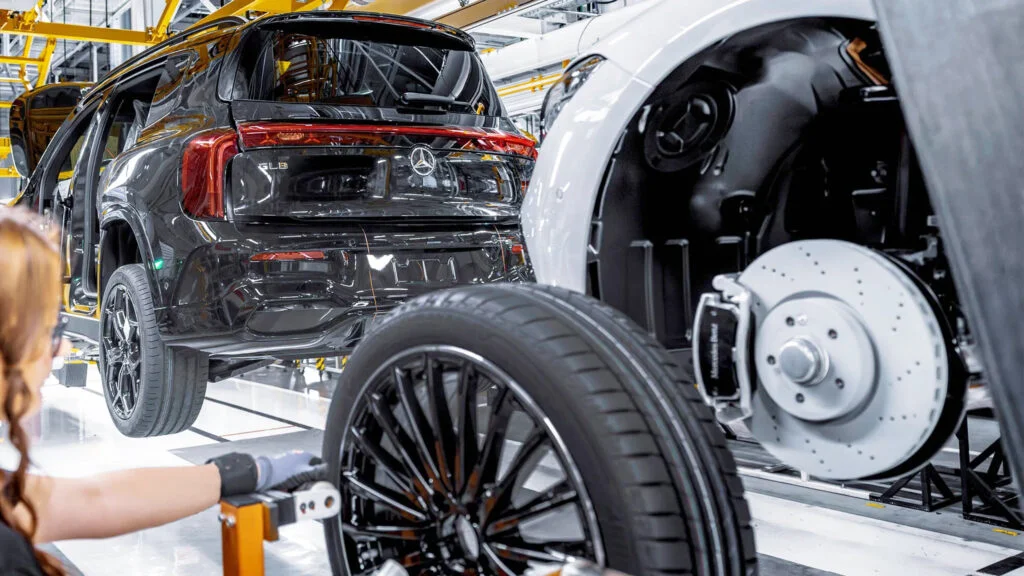
Mercedes-Benz is currently navigating significant hurdles that could lead to the closure of two of its German manufacturing plants. The brand's production chief, Michael Schiebe, conveyed a stark message to employees at the Sindelfingen facility, emphasizing a commitment to maintaining all German locations, but also admitting that closures might be necessary if productivity does not improve. This candid admission highlights the precarious situation in which traditional automakers find themselves, as the pressures to adapt increase.
Competition from Chinese Automakers
An underlying factor in this situation is the intensive competition from Chinese automakers, such as BYD and Geely, which are increasingly gaining market share with their more affordable vehicle offerings. These brands aren't just encroaching on market share — they're fundamentally challenging the business models of established names like Mercedes and Volkswagen. The Chinese market is often seen as a benchmark for affordable technology and electric vehicles, putting the pressure on legacy brands to rethink their strategies and pricing structures.
This trend has been detrimental to established brands like Mercedes and Volkswagen, both of which are facing pressures to enhance efficiency and reduce costs to compete effectively. It's a significant shift. The reality is that consumers are more price-sensitive than ever, especially in a post-pandemic economy, forcing companies to reassess their value propositions. Everyone knows that if you're working in this space, the luxury and high-performance angles that once defined brands are not always enough to justify steep prices.
Cost-Cutting Measures and Union Responses
The need for cost-cutting measures is evident, particularly against the backdrop of high operating expenses in Germany. Labor costs, energy prices, and regulatory constraints have made manufacturing in Germany more expensive compared to less-developed markets. Mercedes has specifically pointed to the necessity of reaching new agreements with the IG Metall union, which represents a significant portion of its workforce. This negotiation will be critical for the brand as it seeks to balance its financial health with its commitment to its employees.
The union's response to the potential plant closures has been firm, criticizing management for threatening job losses as a means to compel concessions from workers. In their view, it's not just a bargaining tactic but a moral issue. According to IG Metall representatives, such ultimatums are unacceptable, revealing deep-rooted tensions between labor and management that could complicate negotiations. The union's leaders have expressed their intent to resist any actions that jeopardize jobs, suggesting that plant closures would provoke pushback rather than compliance. This scenario sets the stage for a high-stakes confrontation that could define both the company’s future and that of its workforce.
Current Manufacturing Footprint
Currently, Mercedes operates seven powertrain plants and three vehicle assembly sites in Germany. The exact locations that could be threatened have not been disclosed, but industry insiders recognize that the firm’s production strategy is being reevaluated in light of ongoing competition and cost pressures. This lack of specificity is indicative of the uncertainty gripping the automotive sector. Stakeholders are left to ponder which iconic facilities, steeped in history and tradition, might be at risk. The stakes couldn’t be higher; the decision to close a manufacturing site doesn't just impact jobs; it alters the company's identity and legacy in a market increasingly dictated by agility and adaptability.
Industry-Wide Concerns
The situation mirrors challenges faced by Volkswagen, which is also contemplating closing several of its German facilities due to declining competitiveness. Reports indicate that VW is assessing a plan to shut down four plants from 2031 to 2034. This isn't just a coincidence but a symptom of broader struggles within the German automotive sector, which has long been a bastion of manufacturing expertise. As both companies weigh their options, the pressure to remain viable in a rapidly changing market becomes painfully clear.
Declining Sales and Tariff Impacts
Compounding the issues for Mercedes-Benz, sales in China—a key market—have seen a steep decline, dropping by 30% in the second quarter. This slump, coupled with significant tariff impacts from the US market ($1.1 billion in losses attributed to tariffs alone in 2025), underscores the urgent need for strategic changes within the company and a reassessment of their global operations. In this context, the company’s reliance on certain markets may lead to vulnerability; a singular dependence on high-margin segments without a plan for diversification could be fatal.
Future Outlook: Implications for Mercedes-Benz
As the automotive market evolves, companies like Mercedes are under increasing pressure not only to maintain their historical foothold but also to adapt rapidly within an intensely competitive global ecosystem. The outcomes of ongoing negotiations with unions and the company’s ability to enhance productivity will ultimately dictate the future of its German manufacturing footprint. The decisions made in the coming weeks and months will be pivotal. This isn’t just about numbers on a balance sheet; it’s about the future trajectory of a storied brand.
The next steps for Mercedes-Benz will hold significant implications for its operational strategy and employee job security, as industry players closely watch how the company navigates these extensive challenges. What remains to be seen is whether the company can find a middle ground that satisfies both its bottom line and its workers. It's an intricate balancing act, and the stakes have never been higher.


Discussion
Sign in to join the discussion.