Stellantis introduces the BOW concept—an electric, driverless delivery vehicle designed for urban logistics, but details remain sparse.
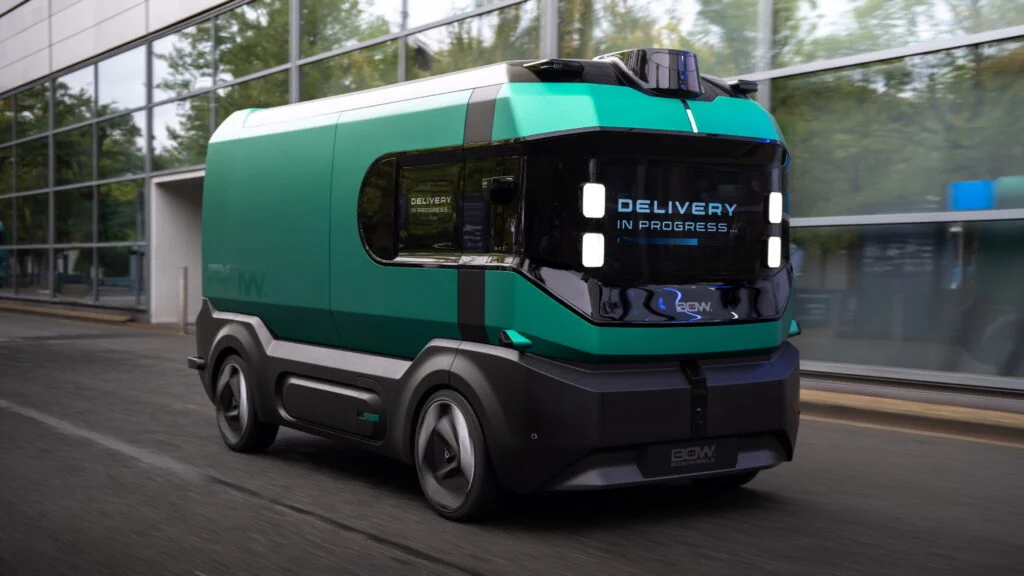
Stellantis has launched the BOW concept, an entirely electric delivery vehicle that redefines traditional logistics design. As the name suggests, BOW stands for Box On Wheels, emphasizing its unique approach where there’s no need for a driver, cab, or dashboard. Instead, it looks more like a mobile parcel locker, prioritizing efficiency over convention.
This concept was revealed at the IAA Transportation in Hanover, Germany, where Stellantis conducted live demonstrations to showcase its potential. Developed in conjunction with UQI Robotics, BOW aims to explore the possibilities of autonomous logistics in urban environments, particularly in low-emission zones and specialized locations like hospitals, factories, and airports.
Rethinking Delivery Vehicles
Traditional delivery vans require considerable space for a driver and their accompanying controls. With BOW, there's a clean break from that model. The vehicle is designed purely for cargo—think about that: an entire vehicle dedicated to maximizing storage rather than human comfort. This shift hints at a future where fleets can be designed around efficiency and cost-effectiveness, utilizing space more smartly and potentially allowing for denser urban deliveries.
Autonomous delivery systems have the potential to mitigate many of the challenges cities face, such as traffic congestion and pollution. In fact, as urban areas continue to grow, the demand for delivery services will likely outpace traditional logistics capabilities. This concept leads us into an intriguing discussion about what autonomy can achieve in logistics—something that's critical as we consider future urban mobility solutions.
However, Stellantis hasn’t provided many specifics about the BOW. We’re left without critical information such as battery capacity, range, motor output, and autonomy levels. The vagueness around these specifications is concerning, especially for a concept vehicle that's being marketed as innovative. The company has labeled it a concept, with validation processes set to begin in Europe. Yet, any further production plans or details remain speculative. This leaves many unanswered questions about its practical implementation on public roads and how it will comply with existing regulations.
Comparative Landscape
The notion of a box-like delivery system isn't entirely new. Various small delivery robots have already begun operating on sidewalks in cities, transporting food and goods. Companies like Starship and Kilowott have pioneered small autonomous delivery units, paving the way for a future where logistics solutions are more granular and localized. Yet, BOW’s ambition seems to stretch beyond these examples, aiming for seamless integration into urban transportation systems that can manage larger payloads in more complex environments.
What sets BOW apart is its goal to specifically enhance urban logistics within low-emission zones—an aspect of growing importance as cities around the globe tighten regulations on vehicle emissions. If BOW can deliver on its promise, it could greatly influence how organizations adapt their delivery strategies in response to these regulatory pressures. Ultimately, this concept signifies Stellantis’s strategic shift. The company is not merely focused on selling conventional vans from its extensive brand portfolio but is envisioning a future where autonomous delivery vehicles, filled with efficient software instead of drivers, become commonplace.
This ambitious outlook hints at a transformed logistics paradigm. However, the pathway to that vision isn't yet clear. How exactly will Stellantis ensure the BOW's safety in complex urban environments? What kind of infrastructure will be necessary to support operations? These considerations will be pivotal in determining whether BOW remains just a concept or evolves into a practical solution.
Implications and Future Outlook
The BOW concept isn't just about creating a new delivery vehicle; it represents a shift in how companies might think about logistics overall. If autonomous systems like BOW can prove reliable and efficient, it could lead to a broader acceptance and implementation of similar technologies across various sectors. Companies that are heavy hitters in the logistics space will need to rethink their strategies, potentially investing in automation to keep pace with market changes driven by innovations like BOW.
If you’re working in this space—whether you're a logistics manager, an urban planner, or a technology developer—there's a lot to consider here. The implications of such concepts could ripple across industries. For example, if urban areas can successfully integrate these vehicles, it might open the door to different business models, such as reduced delivery costs and quicker service times.
The challenge lies in the execution. Many autonomous vehicle concepts have emerged in the past, but actual implementation often stalls due to technical limitations or regulatory hurdles. And yet, the combination of electric power and autonomy in a delivery vehicle may have enough momentum to push through some traditional barriers. This is more significant than it looks, as cities continuously seek ways to reduce their carbon footprints and streamline logistics.

Discussion
Sign in to join the discussion.