The Kia PV5 Chassis offers a flexible platform for various commercial conversions, featuring strong performance metrics and ample customization options.
Expanding Versatility with the Chassis Variant
The Kia PV5 is making waves in the commercial vehicle market with its unique Chassis variant, which expands the van's versatility beyond its conventional Cargo and Passenger models. As Kia gears up for the launch of its new PV7 van in late 2027, the PV5 remains a pivotal player in the light commercial vehicle (LCV) segment. The transition in commercial vehicles toward customization is reshaping traditional marketplace dynamics, and Kia aims to lead this trend with the Chassis variant.
A Blank Canvas for Customization
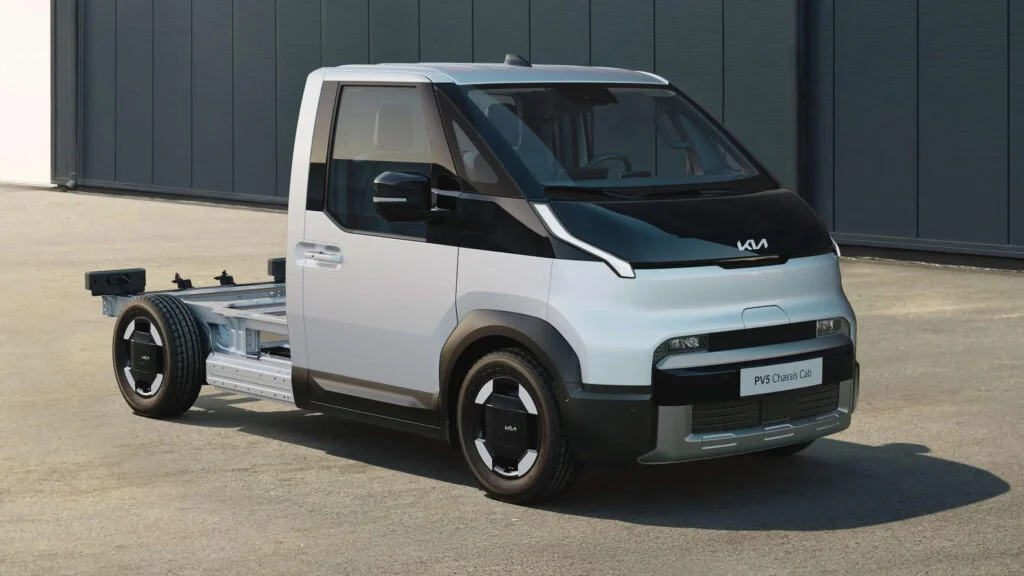
The Chassis variant presents a blank canvas for countless aftermarket configurations, appealing to a wide array of business needs. With dimensions of 4,610 mm (181.5 inches) in length and a wheelbase of 2,995 mm (117.9 inches), it retains the futuristic front design seen in its cargo and passenger counterparts, while the rear showcases a minimalist chassis layout perfect for customization. This design makes the PV5 particularly attractive for small businesses looking to tailor vehicles to specific operations. It’s more than just a vehicle; it's a solution tailored to the unique requirements of various trades.
This model includes essential features like a custom bulkhead, a rear windshield, and taillights affixed directly to the steel framework, reinforcing its utilitarian purpose. Buyers can choose between durable 16-inch steel wheels or sleeker alloy options, enabling them to select a design that fits their functional or aesthetic preferences. This decision might seem minor, but it reflects broader trends in consumer choice where personalization rank high.
Versatile Applications
The Chassis design is well-suited for various conversion types, including refrigerated vans, dropside pickups, food trucks, and even ambulances. The flexibility this model offers is critical, as many small businesses and service industries are turning toward more adaptable vehicles. Kia has already demonstrated a version with an integrated kitchen, transforming it into a functional food truck, showcasing not only the PV5's potential but also the growing trend of mobile businesses. And this is the part most people overlook: the structural integrity of the vehicle remains while enabling the highly specialized needs of diverse sectors.
Plans for additional conversions in collaboration with TGS Automotive Group later this year further indicate that Kia is committed to expanding its customization footprint. This could open new revenue avenues for businesses and deliver groundbreaking solutions that cater specifically to niche markets. There's a significant opportunity here, as many companies are seeking to modify existing vehicles to suit their specific needs instead of manufacturing entirely new models.
Performance Metrics
As for performance, the PV5 Chassis is available exclusively in a Long-Range electric configuration in the UK, featuring a front-mounted motor that delivers 161 horsepower (120 kW / 163 PS) and a substantial 71.2 kWh battery pack. This setup provides an estimated WLTP range of 259 miles (416 kilometers), making it competitive within its class. While electric vehicles (EVs) gain traction, the need for commercial options remains paramount. This model's capabilities address critical operational concerns for businesses that rely on range and efficiency.
For markets outside the UK, Kia offers a Mid-Range version equipped with a smaller 51.5 kWh battery and a less powerful motor outputting 120 horsepower (89 kW / 122 PS). This dual offering highlights Kia's strategy to capture various segments of the market, catering both to those needing robust performance and those looking for efficiency. Regardless of the configuration, both variants can handle a maximum payload of about 1,005 kg (2,216 pounds), comparable to many diesel midsize pickups. This level of performance addresses a significant gap in electric commercial vehicles, showing that sustainability doesn’t have to come at the expense of utility.
Comfort Meets Utility
Despite its practical design, the PV5 cabin doesn’t skimp on modern comforts. It includes a 7.5-inch digital instrument cluster, a 12.9-inch infotainment system, heated seating, and advanced driver-assistance systems (ADAS). These features ensure that the PV5 Chassis is not just about functionality but also offers a comfortable driving experience. If you're working in this space, balancing utility with driver comfort is vital to attracting buyers who spend extensive hours on the road.
Future Implications
This combination of utility, performance, and comfort positions the Kia PV5 Chassis as a formidable contender in the commercial vehicle market. The anticipated rollout of more conversion options, combined with increasing demand for electric LCVs, reflects a broader shift in consumer priorities. As environmental regulations tighten and businesses seek greener alternatives, Kia could capture a significant share of this growing segment. However, as competitors also pivot toward electric offerings, sustaining this momentum will require ongoing innovation and adaptability.
Ultimately, the PV5's emergence in the commercial sector represents not just an evolution of Kia's product line but a response to larger trends in business operation and vehicle customization. Failure to adapt could see Kia losing ground. The competition isn't just about delivering vehicles; it's about providing tailored solutions that empower businesses to thrive.

Discussion
Sign in to join the discussion.