The BMW E90 320Si stands out as an affordable collector's item, echoing the spirit of the iconic E30 M3 while remaining surprisingly accessible.
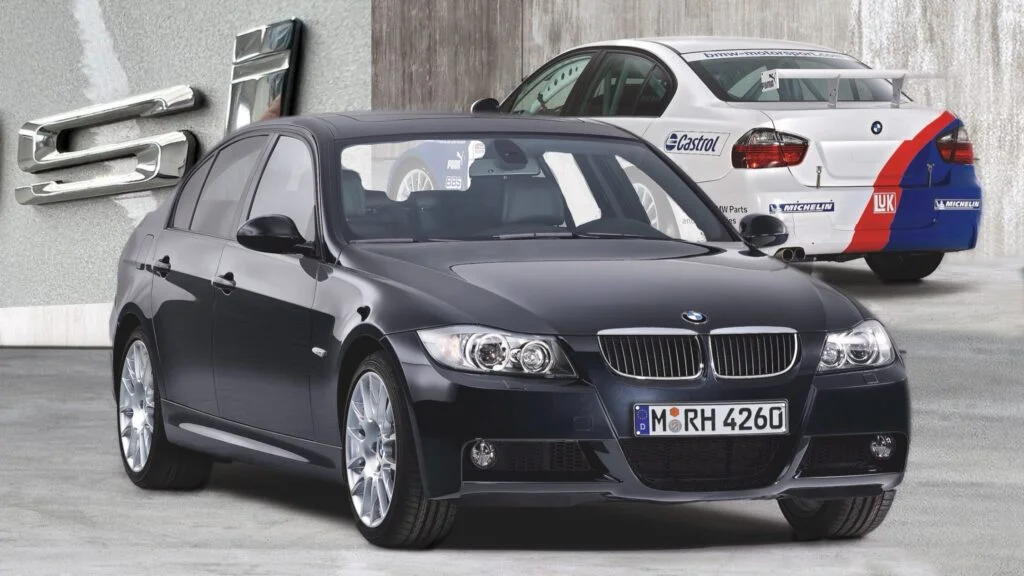
The world of motorsport has a storied history of producing exceptional road cars, often born from homologation requirements. These rules compel manufacturers to create a certain number of street-legal versions of their race cars, allowing enthusiasts to own a piece of racing pedigree. The BMW E90 320Si might not garner the same notoriety as its predecessors like the E30 M3, but it's a gem worth discussing—especially given its affordability.
Currently, three examples of the 320Si are available in the UK market, with prices ranging from about £3,900 to £7,995 (approximately $5,200 to $10,600). This is a modest sum for a car that was instrumental in BMW's motorsport success during its production era, which spanned from 2005 to 2006, primarily contributing to the World Touring Car Championship (WTCC).
For those unfamiliar, the 320Si isn't commonly recognized outside Europe, making it a fairly under-the-radar option for collectors. With this obscurity comes an enticing price point that’s hard to ignore—exemplifying the entry-level sports car segment for enthusiasts who wish to experience BMW's legacy without breaking the bank.
Origins of the BMW 320Si
The story of the 320Si began as BMW eyed competition in the WTCC. Faced with regulations that mandated a 2.0-liter engine capacity, the automaker sought to emulate the lightweight, rev-happy characteristics of vehicles like the original E30 M3. Thus, engineers modified the existing 1,995 cc engine from the regular 320i, leading to a finer performance-focused iteration.
The enhancements included enlarging the bore, adjusting the stroke, and optimizing combustion efficiency—all aimed at extracting more performance from a four-cylinder engine. The result was a spirited 1,997 cc engine that produced 171 horsepower and 143 lb-ft of torque. Although these figures may sound modest today, they were significant improvements over the standard model.
Design and Specifications
Visually, the 320Si left something to be desired. True aficionados might spot its subtle sporty upgrades, like the 18-inch wheels, enhanced brakes, and unique exterior touches, but for the casual observer, it might pass as just another 3-Series. That said, its true value lies under the skin. The car sports an M Sport suspension package and a shorter rear axle ratio, allowing it to hit a respectable 140 mph.
This driveability is coupled with a distinctive sound and engaging driving dynamics that enthusiasts often crave. The 320Si was built to meet a homologation requirement of 2,500 units, with BMW exceeding this by producing 2,600. However, all these vehicles remained exclusive to markets outside the U.S., solidifying their status as rare finds.
Performance and Market Position
The 320Si's performance figures, while respectable, didn’t create a buzz in the automotive press back in its day. Its 0-62 mph sprint takes around 8.1 seconds—not particularly breath-taking compared to more modern entries in the compact performance category. Nevertheless, the car's charm extends beyond raw numbers; it's about the driving experience and connection to BMW’s racing heritage.
Moreover, following its competitive racing debut, the track iteration of the 320Si demonstrated impressive capability, clinching both the manufacturers’ and drivers’ championship titles in 2006 with the help of renowned driver Andy Priaulx. Such accolades highlight the model's performance role within BMW's storied history, which transcends the confines of its seemingly benign road version.
Future as a Collector's Item
With prices hovering below $10,000, the 320Si presents a unique opportunity for collectors and enthusiasts alike, especially when compared to escalating prices for more popular models like the E30 M3, which often fetches upwards of $75,000 in the current market. Given its rarity and performance history, many believe prices for the 320Si might see an uptick as recognition of its importance grows.
This potential reflects broader trends visible among other BMW models, where underappreciated variants suddenly gain traction as nostalgia breeds demand among enthusiasts. The E90 320Si, which becomes eligible for import to the U.S. in 2030, could very well experience a surge in interest as its legacy is more broadly recognized.
In summary, the BMW 320Si may not be the most thrilling entry at first glance, but its motorsport roots, affordability, and potential for future appreciation make it an intriguing consideration for anyone looking to delve into the world of performance BMWs.
Whether as a fun weekend driver or a future collector's item, the 320Si makes a compelling case for being more than just a lesser-known iteration of the 3-Series line—it's a piece of automotive history that still holds considerable performance interests today.

Discussion
Sign in to join the discussion.