Tata's new Aeris sedan, starting at $5,500, impressively demonstrates durability by being buried under 20 tons of gravel during its launch.
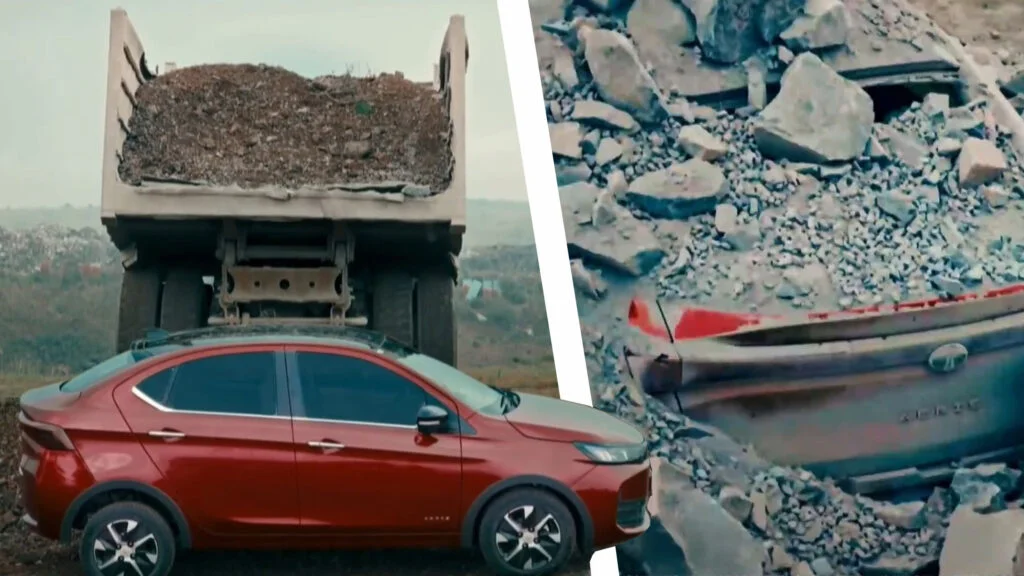
Tata Motors has unveiled its latest offering, the Aeris, priced attractively at Rs 5.29 lakh (about $5,500). The small notchback aims to redefine affordability in the Indian automotive market with a blend of styling and essential features. This launch comes at a time when automakers are increasingly focusing on compact vehicles that balance cost and practicality, appealing to a consumer base that is ever more cost-sensitive.
The Aeris marks a significant update over the old Tigor, launched back in 2017, reaffirming Tata’s commitment to delivering value for money. This variant is more than just a minor refresh; it seeks to address the shifting preferences of Indian car buyers who prioritize contemporary aesthetics alongside functionality. Upon closer inspection, it showcases sharper aesthetics and a well-appointed interior that enhances its previous iteration while maintaining budget-conscious pricing. It's clear that Tata is attempting to elevate its brand perception in the affordable segment, a move that could be pivotal in the saturated market.
Design Elements
The vehicle boasts a notchback profile typical of Tata's design language, extending 3,995 mm (157.3 inches) in length with a wheelbase of 2,450 mm (96.5 inches). A more aggressive front end features redesigned headlights reminiscent of the refreshed Tiago, modernized by a gloss black grille and revised bumper intakes. This attention to design details might attract younger buyers, a demographic that values aesthetics as much as functionality.
The side profile remains largely consistent but now incorporates subtle cladding around the wheel arches and options for 14-inch or 15-inch wheels. Such options enhance the personalization aspect for buyers who often demand customization in this segment. At the rear, new slimmer taillights set against a full-width cluster refresh the look further, complemented by a reworked rear bumper. This effort might not seem ground-breaking, but aesthetic continuity with a refreshing twist can make a noteworthy difference in drawing consumer interest.
Interior Enhancements
Inside, the Aeris maintains a layout similar to its predecessor, now enhanced with a redesigned dashboard and climate controls integrated with environmentally friendly materials. It’s these small yet significant changes that create a more welcoming environment, which is critical in a budget vehicle. Automatic variants include a rotary gear selector, flanked by paddle shifters, which add a sense of sportiness that many buyers in this price bracket will appreciate.
High-end trims feature a 10.25-inch infotainment system paired with a digital dashboard, dual wireless charging pads, a 360-degree camera, parking sensors, and an integrated dashcam. These features are increasingly becoming standards that consumers expect, and the inclusion here positions the Aeris competitively against rivals. Safety doesn't take a backseat either, with six airbags standard across the lineup, and advanced systems like Blind View Monitoring in the flagship trim. This level of safety gear is becoming essential, especially in an environment where consumer awareness around vehicle safety is rising.
With a spacious cargo hold of 419 liters (14.8 cubic feet), the Aeris delivers on practicality, making it suitable for families or urban users needing efficient storage. The emphasis on usability will resonate with buyers who often face challenges regarding space in compact cars.
Powertrain Options
The Aeris is built on an updated version of Tata's XAlpha platform, featuring two non-electrified, naturally aspirated 1.2-liter powertrains. The gasoline variant offers 85 hp (63 kW), while the CNG version yields 75 hp (56 kW). Both options send power to the front wheels via a choice of five-speed manual or automatic transmissions. This range provides buyers with choices, which is crucial in a market where rising fuel prices and environmental concerns shape purchasing decisions.
Durability Validation
Tata took an unusual approach to demonstrate the Aeris's structural integrity and safety features. A dump truck unloaded 20 tons (approximately 44,092 pounds) of gravel and stones onto the sedan's roof, thoroughly burying the vehicle. Following this dramatic test, the roof showed minor deformation, yet the passenger cell remained intact, allowing the doors to open and the car to start and drive away. This kind of bold marketing tactic isn't as common in the sector, yet it effectively communicates a strong message to its audience, reinforcing the brand's commitment to safety and durability even under extreme conditions.
Market Position
The Tata Aeris is poised for delivery starting October 11 in India, presenting a compelling entry price among its competitors. Starting from Rs 5.29 lakh ($5,500), it’s positioned as the most affordable sedan in the country, rivaling models like the Hyundai Aura and Honda Amaze. The top-tier Accomplished trim with a CNG engine and automatic transmission retails at Rs 9.74 lakh ($10,200). The competitive pricing strategy, combined with improved features, could potentially disrupt the current market dynamics.
For buyers looking for a better price-to-performance ratio, the mechanically similar Tata Tiago hatchback remains an attractive alternative, starting at Rs 4.69 lakh ($4,900). This creates a direct clash between the Aeris and the Tiago, a scenario that can benefit consumers significantly if Tata thoughtfully differentiates the offerings.
Implications and Future Outlook
The Aeris launch signals Tata’s strategic move into a highly competitive market, where small sedans often find themselves overshadowed by SUVs and crossovers. With its affordable pricing and enhanced features, the Aeris could appeal to first-time buyers and budget-conscious families. If you're working in this space, keep an eye on how the Aeris adapts to consumer feedback and how Tata positions it against competitors in advertising.
Ultimately, the success of the Aeris will depend not just on its initial reception but also on its long-term reliability and customer satisfaction. How Tata handles this moving forward will be indicative of its growth trajectory in the Indian automotive landscape. There's a fine line between appearing cost-effective and cheap, and how the Aeris is perceived could impact Tata's broader ambitions in this vital market.

Discussion
Sign in to join the discussion.