Audi's A6 Sportback e-tron has claimed the title for the longest distance driven on a single charge, exceeding Lucid's previous record by over 80 miles.
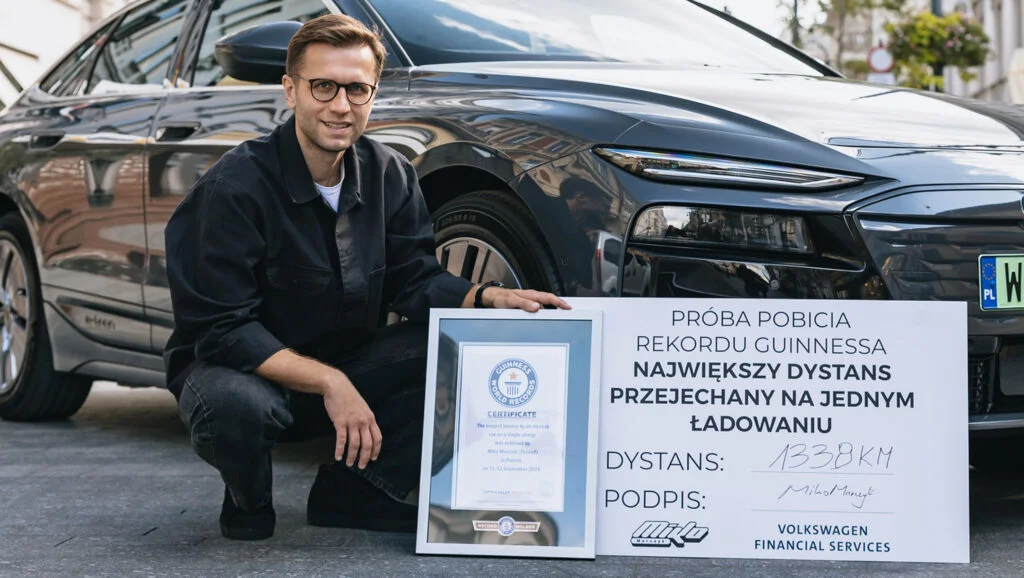
In a stunning demonstration of electric vehicle capabilities, Audi has established a new benchmark for long-distance travel on a single charge. European Rally Champion Miko Marczyk recently drove the Audi A6 Sportback e-tron an impressive 831.4 miles (1,338 km) in Poland, eclipsing the previous record set by the Lucid Air Grand Touring, which managed 748.8 miles (1,205 km). This achievement is not just a marketing stunt; it signals a significant leap in the EV sector, raising the bar for competitors and offering potential consumers newfound confidence in electric vehicle technology.
Record-Breaking Journey
The record-setting journey commenced in Zakopane and wound through various landscapes, including the picturesque Tatra Mountains. The choice of route is significant, as it not only showcases the car's range but also highlights the diverse driving conditions an EV might face on the road. Nature's majestic backdrop didn't just elevate the scenic beauty; it presented real-world challenges that a standard driver would also encounter. Marczyk utilized regenerative braking to extend the vehicle’s range during the drive, which concluded in the Tri-City area of Gdańsk. Notably, he retraced his steps and found his journey ended somewhere between Toruń and Ciechocinek, showcasing both the precision of the navigation systems and the endurance of the vehicle.
Performance Specs
The Audi A6 Sportback e-tron performance variant is equipped with top-tier specifications. Featuring a rear-mounted motor, it hasn't just redefined distance capability; it also boasts 362 horsepower (270 kW) and 417 lb-ft (565 Nm) of torque. What does this mean for performance? It's capable of rapid acceleration from 0 to 62 mph (100 km/h) in just 5.4 seconds and can reach a top speed of 131 mph (210 km/h). These stats already set it apart in the competitive market of electric vehicles. Despite this impressive performance, Marczyk achieved an average energy consumption of just 7.09 kWh per 62 miles (100 km), demonstrating that efficiency can coincide with speed. So, while many drivers focus on quickness and power, this event proves that sustainability doesn’t have to come at a cost to performance.
Adverse Conditions
What makes this achievement even more remarkable is that Marczyk set the record on public roads amidst regular traffic, navigating sections during rush hours. This adds a layer of complexity to the feat that is often overlooked. The average driver faces the challenge of constant speed changes and interruptions, making it a more realistic test of the vehicle's capabilities. Audi's engineering allowed the A6 Sportback e-tron to retain a significant level of efficiency and range, proving that electric vehicles can compete under less-than-ideal circumstances. This aspect underscores not just the car's abilities, but also highlights a growing competence in electric vehicle technology. If you're working in this space, understand that this kind of performance under pressure might reshape consumer perceptions dramatically.
Future of EV Technology
Marczyk expressed his confidence in the advancements made by the Volkswagen Group in electric vehicle technology, stating, “the electric vehicle technology developed over many years by the Volkswagen Group ranks among the best in the world.” This isn't just industry fluff; it speaks volumes about the investments made in research and development. He underscored that this record demonstrates the potential of electric drivetrains that have emerged as leaders in the automotive sector. However, for all the cheerleading, you have to wonder: can scale match innovation? Will these advancements filter down to more affordable models, making this level of efficiency accessible to everyday consumers? The conversation is shifting, but it remains to be seen what tangible effects this will have on the broader market.
A Dual Record Holder
Interestingly, Marczyk is now a titleholder in both internal combustion engine (ICE) and electric vehicle categories. This duality speaks to his versatility as a driver and the significant strides made by automotive technology across powertrains. He previously set the record for the longest distance driven on a single tank of fuel in a Skoda Superb in 2025, covering 1,759 miles (2,831 km) with a remarkable fuel efficiency of 2.6 liters per 100 km (90.4 mpg US). This cross-category prowess shows that efficiency is not merely a talking point for electric vehicles; it’s an aspiration that internal combustion engines have also pursued.
Implications and Future Outlook
As range anxiety fades with robust advancements in electric vehicle technology, Audi’s achievement reinforces the notion that distance may no longer be a limitation for drivers considering EV options. This record challenges manufacturers to innovate further and consumers to reconsider their hesitations about transitioning to electric vehicles. More than just a marketing triumph, this event sets up a potential domino effect. If we see continued improvements in battery technology, charging infrastructure, and vehicle efficiency, we could be witnessing the beginning of a paradigm shift in vehicle ownership—and how we evaluate performance. What does it all mean? Audi isn’t just winning a race; they’re opening a redefined dialogue around the future of transportation.

Discussion
Sign in to join the discussion.