The Ford Bronco Basecamp arrives in Australia and New Zealand, showcasing a hybrid powertrain and a host of features for outdoor enthusiasts.
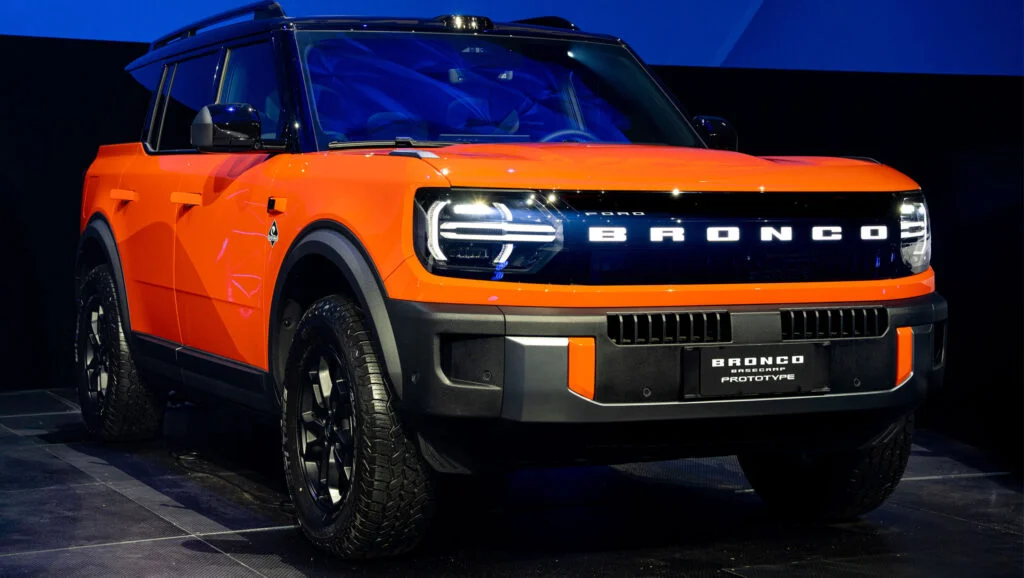
The Ford Bronco Basecamp is set to make its debut in Australia and New Zealand in the latter half of 2027, marking an important chapter for Ford a decade after halting local production. This returns Ford to a market where many enthusiasts still have a strong affection for its legacy vehicles. The announcement forms a significant part of Ford's strategy to increase its market presence in Australia, with plans to expand coverage to over 60% within three years, aiming for over 90% of its sales to be all-new or significantly refreshed by 2030. This ambitious rollout indicates Ford's recognition of the lucrative off-road and adventure vehicle segment in Australia, and it appears they're betting heavily on the Bronco's comeback.
Design and Features: A Closer Look
The Bronco Basecamp was first introduced in China last year, targeting a community of active outdoor enthusiasts seeking adventure-ready vehicles. Ford has observed a rising trend in outdoor recreation, with many individuals seeking vehicles that can handle off-road environments while also providing modern conveniences. This model will feature a hybrid extended-range powertrain that combines two electric motors with a 49 kWh battery pack and a turbocharged 1.5-liter engine designed solely as a generator. A combination of electric and traditional power sources aims to appeal to environmentally-conscious consumers who still demand performance.
While Ford has been reticent on specific details for the Australian variant, it promises driving dynamics akin to electric vehicles paired with a substantial range of approximately 497 to 559 miles (800 to 900 km). That’s quite a compelling range, considering that many traditional vehicles struggle in this area. Drivers can also refuel quickly with gasoline, reiterating the model's versatility for long excursions. This dual-power capability is crucial for outdoor enthusiasts who may find themselves in remote areas where charging stations are scarce.
Performance Specifications: What You Need to Know
In terms of performance, the Bronco Basecamp showcases impressive metrics, starting from ¥229,800 in China (around $34,245 USD or $47,565 AUD). This pricing positions the vehicle competitively among other adventure SUVs while offering a robust output of 416 hp (310 kW / 421 PS) and 442 lb-ft (600 Nm) of torque. Notably, the vehicle also has a focused electric-only range of 137 miles (220 km), which provides a footprint for daily commuting without the need for gasoline. Still, questions may linger about how this electric-only range will affect overall usability in comparison to fully gas-powered rivals.
Camping Capabilities: More Than Just a Vehicle
Ford promotes the Bronco Basecamp as an ideal companion for camping trips. The vehicle’s interior allows for all seats to fold down, accommodating an inflatable mattress for overnight adventures. The idea of turning a vehicle into a cozy makeshift campsite is appealing, but this is where the practical aspects of the design will truly be tested in real-world scenarios. In the morning, users can utilize the rear swing gate’s “Wild Kitchen” feature, complete with a fold-down table, to set up a convenient cooking area. The thoughtful inclusion of cooking space signifies Ford's understanding of the camping lifestyle, but it remains to be seen how well this can be executed in practice. (and this is the part most people overlook)
This model incorporates Pro Power Onboard technology, providing up to 6.6 kW of power to utilize appliances like coffee makers and lights, enhancing its camping capabilities beyond mere transportation. This feature taps into the growing trend of remote work and outdoor living, allowing users to convert the wilderness into a temporary workspace or leisure area. If you're working in this space, you'll appreciate how brands like Ford are capitalizing on the blend of technology and traditional outdoor activities. It’s a savvy marketing move that resonates with a specific demographic.
Special Variants and Their Appeal
Additionally, the more upscale Bronco Basecamp Outer Banks version includes an electric pop-up roof, which is operable at the touch of a button to improve headroom—perfect for camping scenarios and enhancing interior comfort. Such thoughtful design touches could entice buyers looking for a bit more luxury in their adventure vehicle. It also features a 7.5-liter center console compartment that can be heated or cooled, adding to the comfort level for users. Features like these are indicative of a market shift where buyers seek not just adventure, but also comfort and convenience during their excursions.
Ford's Broader Strategy: More Than Just One Model
Aside from the Bronco Basecamp announcement, Ford also revealed plans to introduce the electric Transit City in November, priced at $50,000 AUD ($36,100 USD). This further signals Ford's commitment to electrification across various segments. Simultaneously, the Mustang Dark Horse T8-Spec will also be launched at local dealers. Ford will be providing enhanced support for commercial customers through its new Ford Pro initiative, coupled with an extensive seven-year, unlimited kilometer warranty placed on vehicles serviced exclusively at Ford dealerships. This strategic pivot towards enhanced customer support could make a crucial difference in customer loyalty, especially in competitive markets.
The Implication of These Developments: Future Outlook
Ford's approach with the Bronco Basecamp could reshape its identity in Australia and New Zealand. Rather than just being seen as a legacy brand, Ford is attempting to redefine itself as innovative. This is significant not just for casual consumers looking for a capable vehicle, but also for the environment—offering hybrid technology in an appealing form factor. The success of such models in these markets might set a precedent on how traditional automakers adapt to changing consumer preferences and environmental scrutiny. Yet, whether these efforts will resonate with buyers in a competitive SUV market remains to be seen. The real impact will depend on execution, pricing, and, crucially, customer reception in 2027 and beyond.
Discussion
Sign in to join the discussion.