Volkswagen’s “E” stood for efficiency: an integrated overdrive that lowered highway revs and improved fuel economy in select 1980s models.
What the “E” gear was designed to do
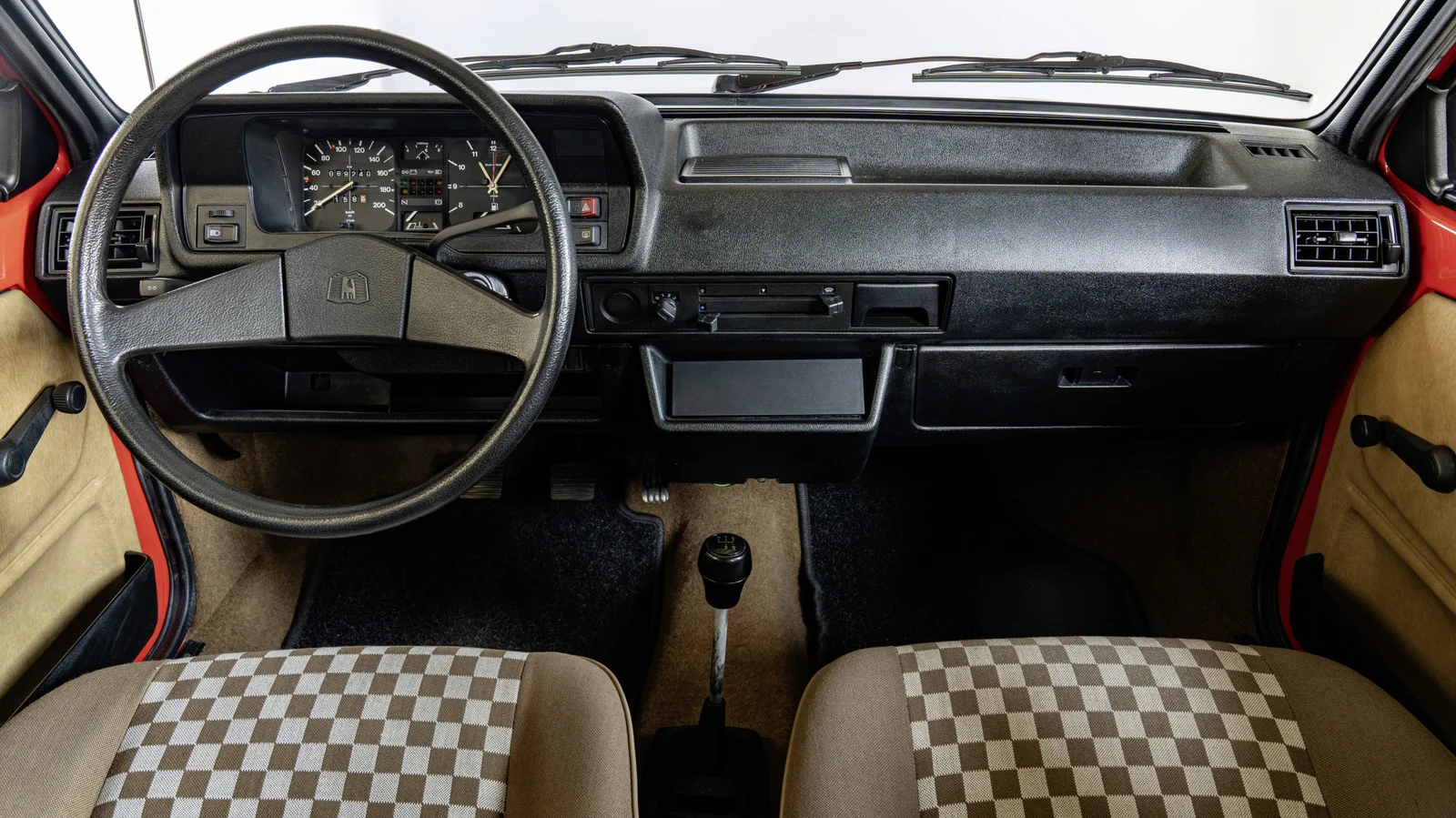
The “E” on some 1980s Volkswagen manual gear selectors marked a practical fuel-saving feature: an overdrive gear designed for cruising. Volkswagen called it “Efficiency,” and the system shows how automakers responded to fuel economy demands before modern engine controls and drive modes became common. Rather than asking drivers to select a computer-managed setting, it made the tradeoff visible in the gear pattern: use a taller ratio to reduce engine speed when the car could hold its pace.
The setup appeared in “3+E” and “4+E” gearboxes fitted to models including the original Golf, Jetta and U.S.-market Rabbit. The letter didn’t mean electrification, and it wasn’t simply another name for a conventional fourth or fifth gear. Selecting E engaged a taller ratio that reduced engine speed at highway pace, helping lower fuel use and engine wear. That benefit depended on conditions, though: a gear suited to steady cruising could feel sluggish when the driver needed to accelerate or climb.
Overdrive built into the transaxle
Overdrive itself had been around for years. Some British and European cars used separate electro-hydraulic units, such as the Laycock de Normanville system, attached to the rear of a standard gearbox and operated by a switch or stalk. Volkswagen took a different route: it built the overdrive into the transaxle of its front-wheel-drive cars and made it part of the shift pattern. That integration made the feature part of ordinary gear selection, rather than a separate device drivers had to engage independently.
The 1981 Volkswagen Rabbit LS’s “3+E” transmission used a four-speed casing with wider spacing between ratios. Its first three gears handled most urban and back-road driving; E was intended for sustained highway travel. With a 0.70:1 overdrive ratio and a 3.89:1 final drive, the Rabbit turned about 2,500 rpm at 60 mph in E. The figures describe the point of the design: once the car was moving steadily, the engine could turn more slowly than it would in a lower gear.
That gearing helped raise fuel economy compared with the older four-speed. The cited figures climbed from 24 mpg to 28 mpg, with highway consumption reaching 42 mpg. Those gains came with a clear compromise: E worked best when maintaining speed, so drivers needed to downshift to accelerate more strongly. The numbers here are useful, but they don’t make the transmission a universal efficiency upgrade; the advantage depended on using the tall gear where it suited the road and the engine’s available power.
Formula E added efficiency cues
Volkswagen expanded the idea in Europe with its Formula E trim, sold from 1981 through 1985. The name referred to fuel efficiency, not the later electric racing series. The package appeared across the Polo, Golf, Jetta, Scirocco, Passat and Santana ranges, as well as the Audi 80 and 100. That breadth suggests Volkswagen treated efficiency as a product feature that could be applied across several models, rather than as a one-off transmission experiment.
Formula E paired a “4+E” transmission with modest aerodynamic changes and an early driver feedback system. An electro-vacuum computer compared engine load with engine speed, then lit an amber arrow on the instrument panel to suggest an upshift when it judged that would improve efficiency. It didn’t take control of the car; it gave the driver a prompt. Here’s the thing: that made fuel saving partly a matter of driver behavior, with the dashboard offering guidance instead of hiding the decision inside an automatic system.
The package’s details also show how manufacturers approached efficiency before today’s layered software controls became common. A taller gear addressed engine speed, aerodynamic tweaks addressed resistance, and the indicator tried to help drivers choose when to shift. Each element was limited on its own. Together, they made economy a visible part of how the car was driven (and this is the part most people overlook).
What the old E gear still tells us
These widely spaced gearboxes eventually gave way to newer approaches. After 1985, electronic multi-point fuel injection, variable valve timing and more standardized five- and six-speed manuals made it possible to improve real-world economy while preserving smoother acceleration. The shift reflects a broader engineering challenge: reducing fuel use is easier to sell when drivers don’t have to accept a conspicuous loss of response in everyday situations.
The old E gear’s purpose is still easy to read: keep revs down on the open road, and shift down when the car needs more pull. It was a plain mechanical answer to a problem that later systems could address with more precise engine management and a wider choice of ratios. This is more significant than it looks: the “E” made efficiency a choice the driver could feel in the gearbox, with a straightforward benefit and an equally straightforward cost.
If you're working in this space, the lesson is less about reviving one old gear pattern than about making efficiency understandable to the person behind the wheel. A low-rev cruising ratio can save fuel under the right conditions, but it can also make a car feel less responsive. The engineering only works as a product idea when drivers understand when to use it. A tradeoff, made visible.
Discussion
Sign in to join the discussion.