Mountain Yotas’ SEMA Tacoma pairs 40-inch tires and portal axles with a rooftop tent, custom bodywork and an orange-accented interior.
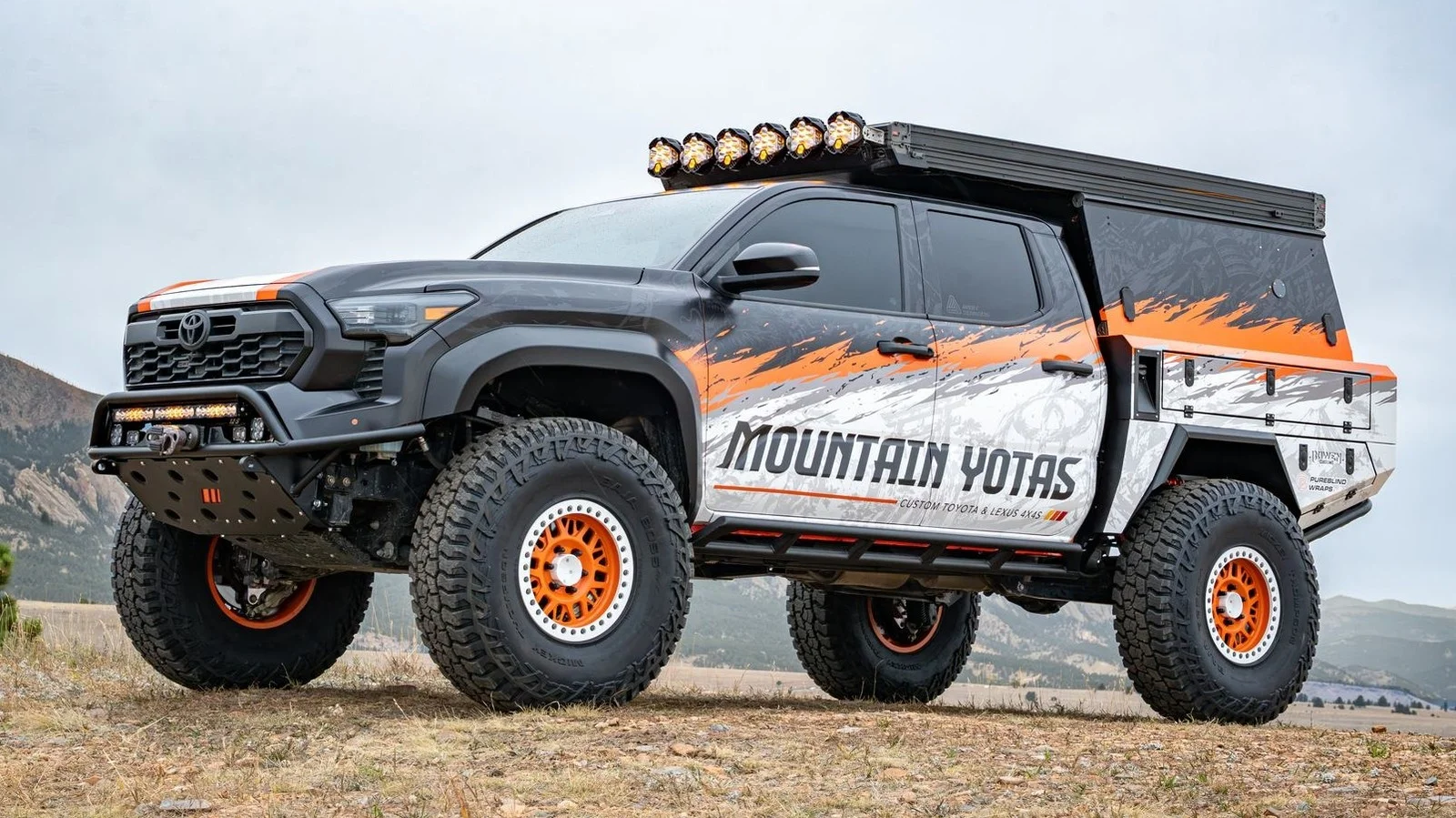
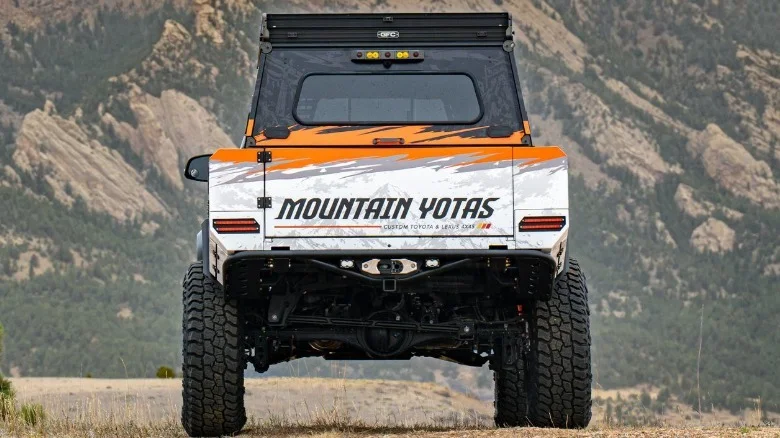
Mountain Yotas’ SEMA-bound Toyota Tacoma makes its priorities plain: 40-inch tires, portal axles and a rooftop tent turn this midsize pickup into a highly specialized off-roader. The Wheat Ridge, Colorado, shop built it to showcase its customization work, pushing the Tacoma well beyond a factory configuration. This is a show vehicle with a practical theme: its equipment points toward trail use and camping, while its bold colors make sure the build reads clearly from across an event floor.
The scale of the changes matters. A larger tire and extra clearance can help a truck tackle obstacles that would challenge a standard pickup, but those parts also make the vehicle more specialized. Mountain Yotas hasn’t supplied details about how the Tacoma drives, what its completed build weighs, or how the modifications affect everyday use. The hardware tells us what the shop wants the truck to do; it doesn’t, by itself, establish how well each compromise works on the road.
A show truck with a distinct visual brief
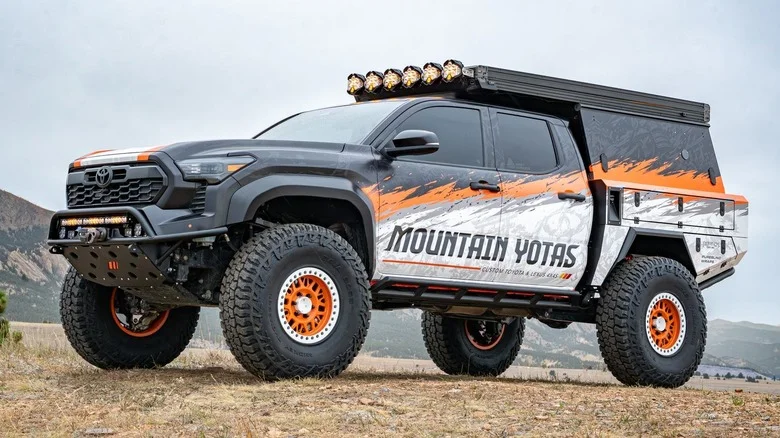
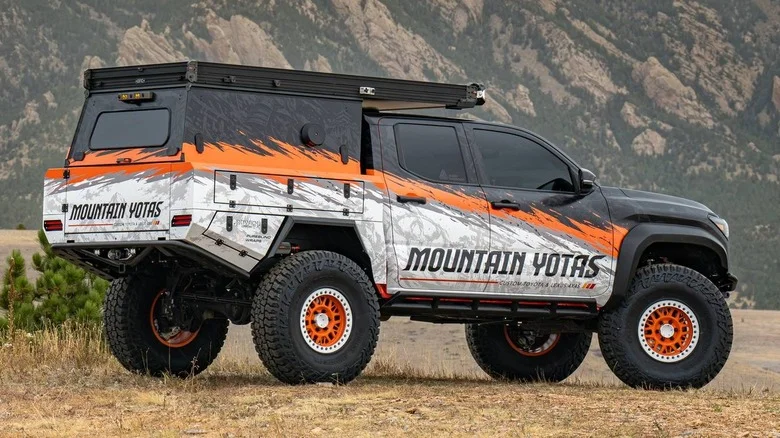
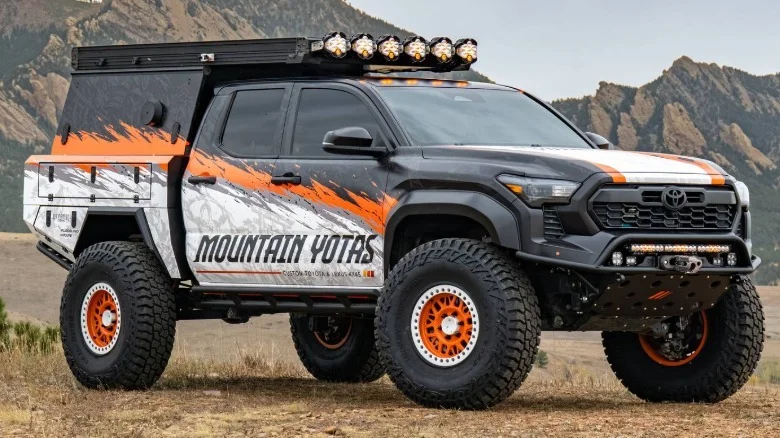
The exterior, designed by Nick Hughes, combines black, white, gray and orange in a wrap that carries through to the beadlock wheels. Those wheels wear 40-inch Mickey Thompson Baja Boss R/T tires, backed by Fox Factory Race Series DSC Evo shocks. The color scheme gives a coordinated appearance to a build whose components could otherwise compete for attention. That visual discipline helps the truck look deliberate, even as its proportions announce that subtlety wasn’t the goal.
Fox sells Tacoma versions of the shocks for more than $6,000, though Mountain Yotas hasn’t disclosed the cost of this complete build. The shock price offers only one reference point; it doesn’t account for installation, the other suspension parts, fabrication or the rest of the truck’s equipment. The numbers here are underwhelming as a guide to the final price, because there’s no total for readers to compare with the cost of a standard Tacoma or a less extensive conversion.
Hardware built for rough terrain
Portal axles from 74Weld raise the truck’s off-road capability, while billet upper control arms and rear links add to the suspension changes. Portal axles use gearing at the wheel ends to increase clearance beneath the axle housing, a design that suits builds aimed at clearing rough ground. They also signal how far this Tacoma has moved from an ordinary pickup setup: this is a purpose-built collection of parts, with the suspension and tire package shaping the vehicle’s character.
A Hardblock 4x4 front locker joins a steel brush bar, black skid plate, LED driving lights and a winch in place of the standard front bumper. Each item points to a different trail need: traction, protection, visibility or recovery. Here’s the thing: a list of serious hardware can make a build sound ready for anything, but real capability depends on how the parts work together and how the truck is used. The source doesn’t provide trail testing, so the equipment is the evidence available.
The customized bed carries a large rooftop tent, giving the truck a camping role alongside its trail focus. That adds a second use case to the build, though a tent and the gear needed to support a trip also mean more equipment to carry. Mountain Yotas hasn’t shared details about storage, payload or how the bed is arranged around the tent. A camping setup, in other words, is part of the concept; its day-to-day practicality remains unreported.
Mountain Yotas hasn’t specified which version of the Tacoma’s turbocharged 2.4-liter four-cylinder powers the build. Depending on the version, the engine produces 228 or 278 horsepower. A Magnaflow exhaust and K&N air intake complete the listed powertrain changes, but no output figures are given for those parts. That leaves an obvious question unanswered: whether the modifications change performance in a measurable way, or chiefly add sound and intake hardware.
Orange details carry into the cabin
Inside, black leather seats feature perforated orange inserts and contrast stitching. Topographical map patterns worked into the leather tie the cabin’s design to the truck’s outdoor purpose, extending the exterior palette into a space drivers and passengers will see up close. It’s a thoughtful touch, and this is the part most people overlook: a show build’s identity isn’t created by its biggest components alone. Small design choices can make an extensive parts list feel like one coherent project.
Founder Dwight Houser said the shop takes on projects inspired by clients’ “wildest dreams” and aims to make them real. Here, that ambition has produced a Tacoma with striking show-truck styling and hardware aimed at demanding terrain. For owners considering a similar build, the Fox shocks alone offer a hint of the likely cost, while the undisclosed total leaves the broader budget uncertain. If you’re working in this space, the Tacoma is a reminder that a custom truck has to communicate two things at once: what it can do and why someone chose to build it this way.
What the build says about customization
This is more significant than it looks as a shop showcase: the Tacoma pairs a recognizable outdoor use case with a highly visible design, giving viewers a way to read the build beyond its parts list. Yet the details provided are strongest on equipment and appearance, not on performance results, price or ownership tradeoffs. That gap is common in show-vehicle coverage, where the finished object is on display but its behavior over time isn’t. And yet. The truck’s combination of camping gear, recovery equipment and extensive suspension changes makes its intended direction unmistakable, even without a complete account of what it costs or how it performs.
For now, the Tacoma is best understood as a demonstration of Mountain Yotas’ approach: start with a client’s ambitious idea, then carry that idea through mechanical changes and cabin details. The 40-inch tires and portal axles make the strongest statement, while the tent and mapped leather give the truck a more personal identity. Whether that balance would suit a particular owner depends on priorities the source doesn’t settle, including budget and everyday usability. The show-floor message is clearer: this Tacoma was built to stand apart, and restraint wasn’t on the brief.
 Mountain Yotas
 Mountain Yotas
Discussion
Sign in to join the discussion.