Porsche is developing 15 exclusive projects as it targets higher sales prices, while pricier 911s and Carrera GT restorations add to the plan.
Porsche is positioning bespoke cars and higher priced 911s as key sources of future profit, adding specialized products to a business built around its established sports car range. The company has 15 exclusive projects in development, with prices ranging from $1.8 million to $15 million, according to Alexander Fabig, its vice president for product and individualization. The spread suggests Porsche is pursuing more than one type of buyer: some projects sit at the very top of the market, while expensive 911s offer a more familiar route to higher sales per car.
“Additional few-off offerings will play a key role,” Fabig told Automotive News. He described the projects as an extension of Porsche’s strategy of building profitable businesses around exclusive niches. That approach makes the car itself only part of the proposition: limited production, individual specifications and a close link to Porsche history can help distinguish a commission from a standard model. But it also sets a high bar. Buyers paying such prices will expect the finished cars to feel meaningfully different, not merely scarce.
The effort complements the new Mission S supercar and the company’s focus on raising average selling prices. Porsche’s bet is that it can add value at both ends of its specialty business: through rare, expensive commissions and through higher priced versions of a core model. The strategy has a clear commercial logic, though its scale and durability will depend on whether demand for those cars holds up.
One-off builds draw on Porsche history
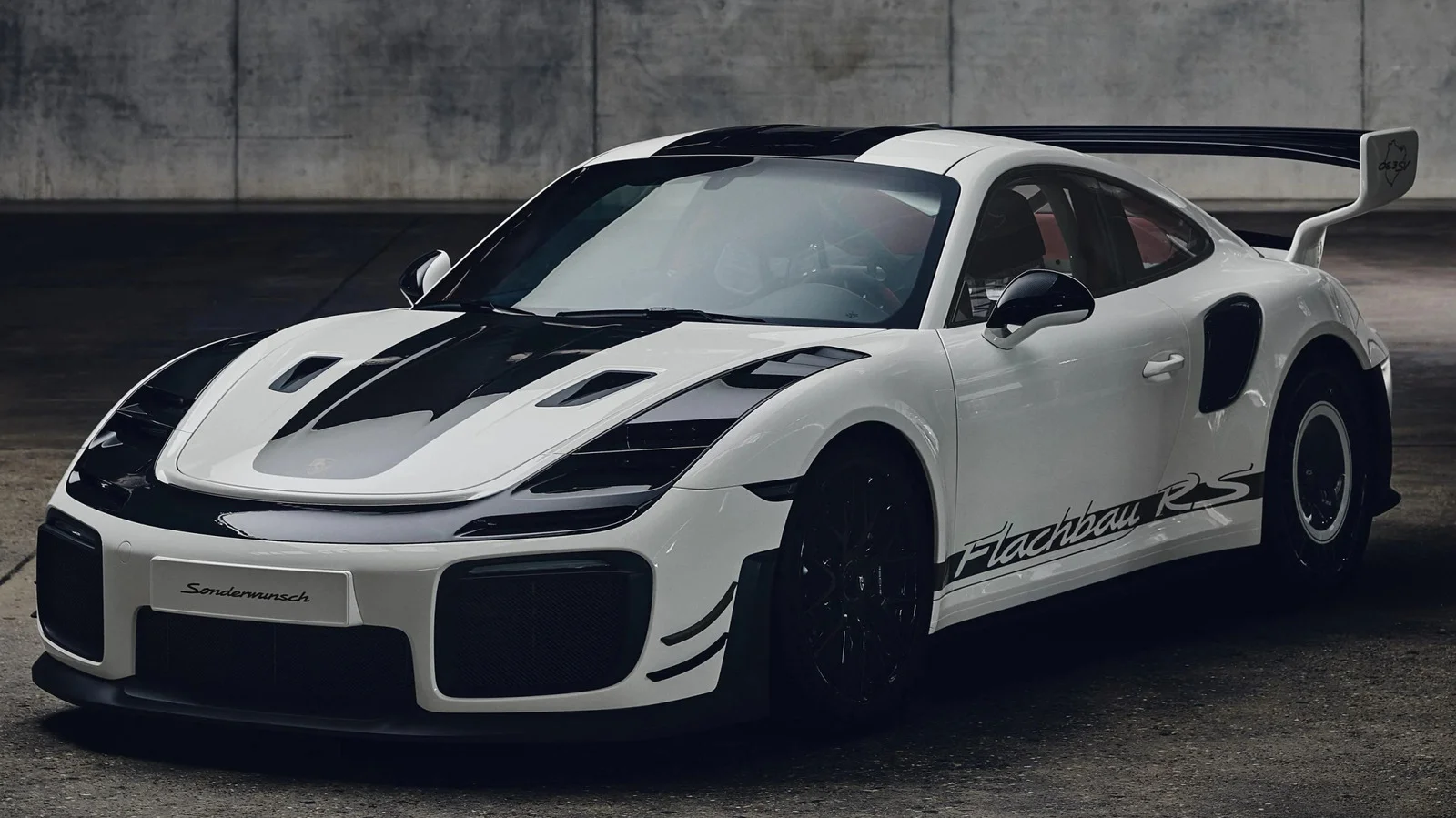
The Flachbau RS offers a preview of the program’s potential. Based on a 2018 911 GT2 RS with the Weissach Package, the one-off takes design cues from the 1978 Moby Dick race car. Porsche hasn’t disclosed its price. That omission leaves the economics of this particular car unclear, but the design lineage shows how the company can turn its archive into a starting point for new commissions.
Another notable project is the 963 RSP, presented in mid-2025 for motorsport figure Roger Penske. It adapts Porsche’s 963 Le Mans prototype for a single customer and draws inspiration from the 917. Together, the cars show how Porsche is turning its racing heritage and custom work into ultra-exclusive road cars. This is more significant than it looks: heritage can give a bespoke car a story that a unique paint scheme alone can’t provide, though the source of its appeal remains closely tied to the brand’s existing history.
For Porsche, these projects also make the boundary between road cars and motorsport less fixed. A competition car can provide the basis for a road-going commission, while an older racing design can inform a modern build. That doesn’t make each project a blueprint for a wider product line. The appeal may depend precisely on the fact that these cars are made for individual customers and remain difficult to replicate.
911 premiums could climb further
Fabig pointed to the 911 GT3 S/C, priced roughly 95% above a standard Carrera, as an example of the room Porsche sees for more expensive models. “We are not done yet,” he said. “Future projects could exceed a 200 percent price premium over the base model.” The claim signals a willingness to push the 911 further upmarket, while relying on the model’s established identity to support prices far beyond its entry point.
The least expensive 2027 Porsche 911 starts at $137,850 in the U.S., including destination. A price 200% higher would land around $413,000—well above the GT3 S/C’s $273,000 starting price and the $387,000 MSRP of the limited 911 GT3 90 F. A. Porsche, introduced late last year to mark what would have been Ferdinand Porsche’s 90th birthday. Those comparisons make the scale of Fabig’s ambition easier to see. They’re reference points, not evidence that a particular future model will reach that price.
That said, premium pricing brings a practical challenge: a model must offer buyers a reason to pay substantially more than they would for a standard Carrera. Exclusive engineering, distinctive design and limited availability can all contribute to that case, but rarity alone may not sustain it. If you're working in this space, the question is whether customers see the price as payment for a genuinely distinct car or mainly for access to a scarce badge and specification.
Restoration adds another profit stream
Porsche is also expanding factory recommissioning and restoration. It has updated 11 Carrera GTs, charging as much as $784,000 for the work. Fabig says 16 more are underway, with another 21 in the pipeline. The figures show that the company sees restoration as a business in its own right, serving owners who want factory involvement in maintaining or renewing an existing car.
Restoration also extends the relationship with customers beyond the original sale. A company with the expertise to work on its older models can offer owners a route back to factory support, while charging for specialized labor and knowledge. And this is the part most people overlook: these projects earn from cars already in customers’ hands, so they don’t rely solely on persuading buyers to replace them with new models.
The mix of bespoke commissions, higher-priced 911s and costly restorations points to a clear shift: Porsche is looking to earn more from customers seeking rare, personalized cars as well as from its established sports car range. The approach could deepen the company’s connection with its most devoted owners, but it also makes growth more dependent on a relatively narrow group willing to pay exceptional prices. For Porsche, the test will be whether these specialist businesses can add meaningful profit while preserving the sense of distinction that gives their products a premium in the first place.
Discussion
Sign in to join the discussion.