Fabrizio Giugiaro and CAVËN Atelier rework the Gallardo with carbon-fiber bodywork, a manual gearbox and up to 560 hp.
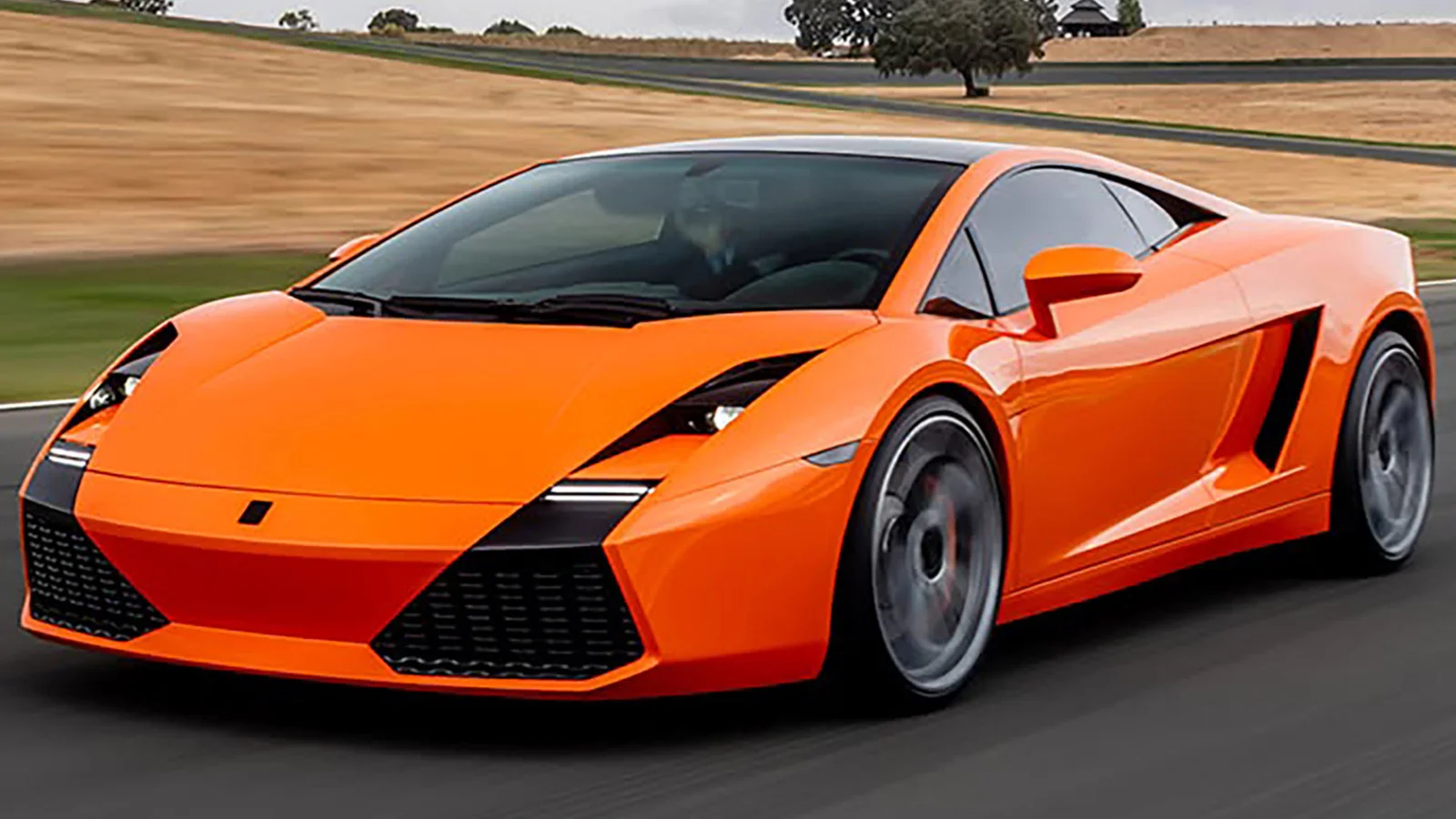
The Hommage 26 gives the Lamborghini Gallardo a rare combination: a connection to the car’s original design authorship and a set of modern mechanical updates. Fabrizio Giugiaro, who shaped an early version of the Gallardo, has joined CAVËN Atelier for a limited restomod that pairs revised styling with a naturally aspirated V10 and six-speed manual. That mix gives the project a clear pitch: revisit a familiar supercar with input from one of the designers tied to its origins, then give it a more traditional driver’s interface.
The project returns to the Gallardo’s roots. The production model arrived in 2003, but its design grew from Italdesign’s 1995 Calà concept and Giugiaro’s 1998 proposal. Luc Donckerwolke signed off on the production car, so the Hommage 26 isn’t a claim that Giugiaro alone shaped the Gallardo as it reached buyers. It’s a new interpretation that draws on his earlier work. CAVËN’s first Designer Series model starts with a Gallardo donor and updates its body, suspension, interior details and powertrain. The donor car remains the foundation, which makes the quality and character of the finished work dependent in part on the individual Gallardo selected.
Carbon fiber reshapes familiar lines
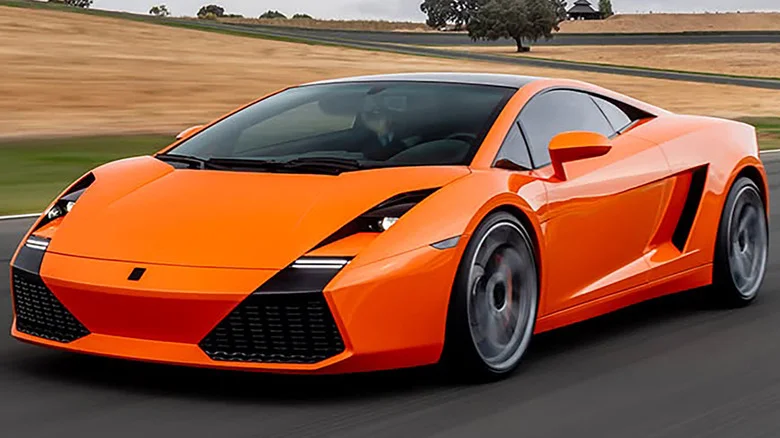
Most of the exterior panels are new carbon fiber, though the Gallardo remains immediately recognizable. That balance matters: a restomod can change enough to justify its existence while still relying on the original car’s visual identity. Here, the revised front end links the headlights to the bumper intakes, a detail the original design’s technology couldn’t support. The change gives the nose a cleaner connection between its separate elements, while keeping the basic proportions legible as Gallardo.
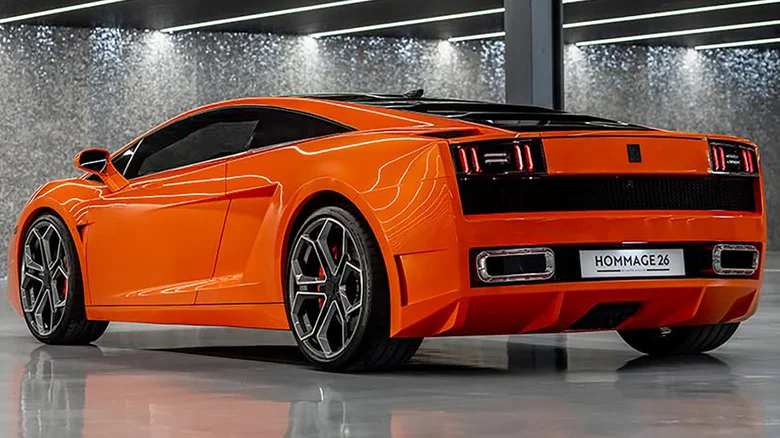
The other exterior changes push the car toward a more contemporary finish. It gets pop-down headlight units, 20-inch alloy wheels, LED taillights, two active rear spoilers and twin exhaust outlets above a body-colored diffuser. Those are visible updates, but the available details don’t explain how the active spoilers behave or what the revised body means for performance. The carbon fiber is a material choice, not proof by itself of a particular weight saving or aerodynamic gain. For now, the clearest case is aesthetic: Giugiaro’s early design language is being reworked with newer equipment.
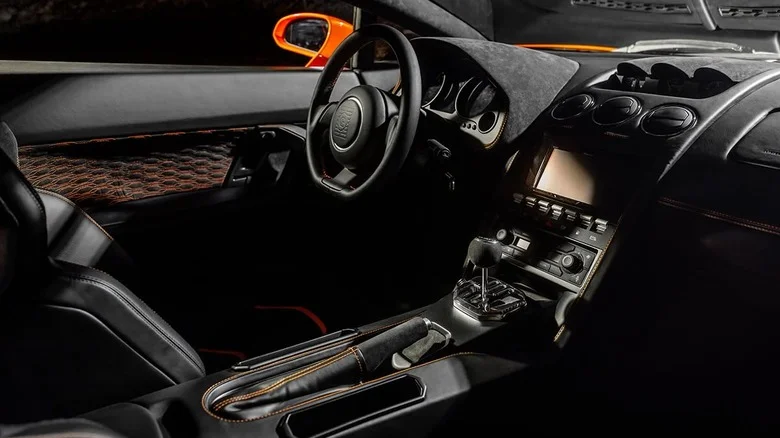
The cabin stays close to the donor car’s layout, preserving the familiar arrangement instead of turning the interior into a wholesale redesign. Alcantara across the dashboard, red stitching and hexagonal door-card details add a few changes. An opening rear window is intended to improve the audio experience, a small but unusual detail that suggests CAVËN is thinking about how the car feels to use as well as how it looks. The treatment sounds restrained beside the exterior changes. That may suit a car whose main attraction is its connection to an existing model, though the description leaves questions about what else has been altered inside.
Power comes from the Gallardo’s naturally aspirated V10, offered in 540 hp and 560 hp versions, according to Classic Driver. Both outputs exceed the standard Gallardo’s 493 hp. Those figures establish a clear increase on paper, but they don’t tell us how the engines deliver that power, what work supports the changes or how the two versions differ beyond output. The six-speed manual may be the more telling update: it gives the restomod a driver-focused option absent from the Gallardo’s successors. This is more significant than it looks. A gearbox changes the driver’s role in the car, not just the specification sheet.
A collector car with a manual gearbox
CAVËN unveiled the Hommage 26 at the Concours at Wynn Las Vegas and plans to build 25 examples. Pricing starts at €900,000 ($1,008,800), excluding the donor Gallardo. That’s a substantial starting point before the buyer supplies the car being transformed. Donor prices vary widely, from about $75,000 to more than $500,000 depending on condition, putting a completed car as high as roughly $1.5 million. The spread makes the final outlay difficult to pin down from the headline price alone, and the source doesn’t specify how donor condition affects the build cost.
That price and production run place the Hommage 26 squarely in collector territory. CAVËN says the cars are meant to be driven, a useful distinction in a market where a rare, expensive car can easily become a display piece. But intention is only part of the equation: the price, the limited run and the individuality of each donor will all shape how owners approach the car. If you’re working in this space, the manual gearbox is the point to watch. It gives the Hommage 26 a distinct argument beyond rarity and styling.
There’s competition for that argument. The Gallardo already has another restomod in the mix: Tedson Motors’ Etna, introduced in 2025 with updated styling and Super Trofeo suspension components. That comparison shows how the same donor model can support different interpretations. The Hommage 26’s defining choice is its return to the manual, giving Giugiaro’s familiar shape a distinct driving character. And this is the part most people overlook: a restomod’s appeal isn’t only the list of parts, but the specific experience its builder is trying to preserve or create.
What the project signals for future restomods
CAVËN says other projects are in development with original designers revisiting models from the late 1990s and early 2000s. That points to a broader opportunity for restomods: older cars can be revisited by people connected to their original design, while updated components address expectations that have changed since those cars were new. The approach also carries a built-in limit. A designer’s involvement can lend a project a persuasive story, but buyers will still have to judge the finished car on its execution, its mechanical details and the way it drives.
For the Hommage 26, the strongest idea is also the simplest. It takes a recognizable Gallardo, gives Giugiaro a role in revisiting its design history and pairs the V10 with a manual. A lot depends on the quality of the conversion. The figures and equipment list make the project easy to understand, but they don’t yet show how the car performs on the road or how the new parts come together in practice. The promise is clear; the proof will be in the finished examples.

Discussion
Sign in to join the discussion.