A Tesla patent describes raising the Cybertruck’s front and lowering its rear to make loading motorcycles and other cargo easier.
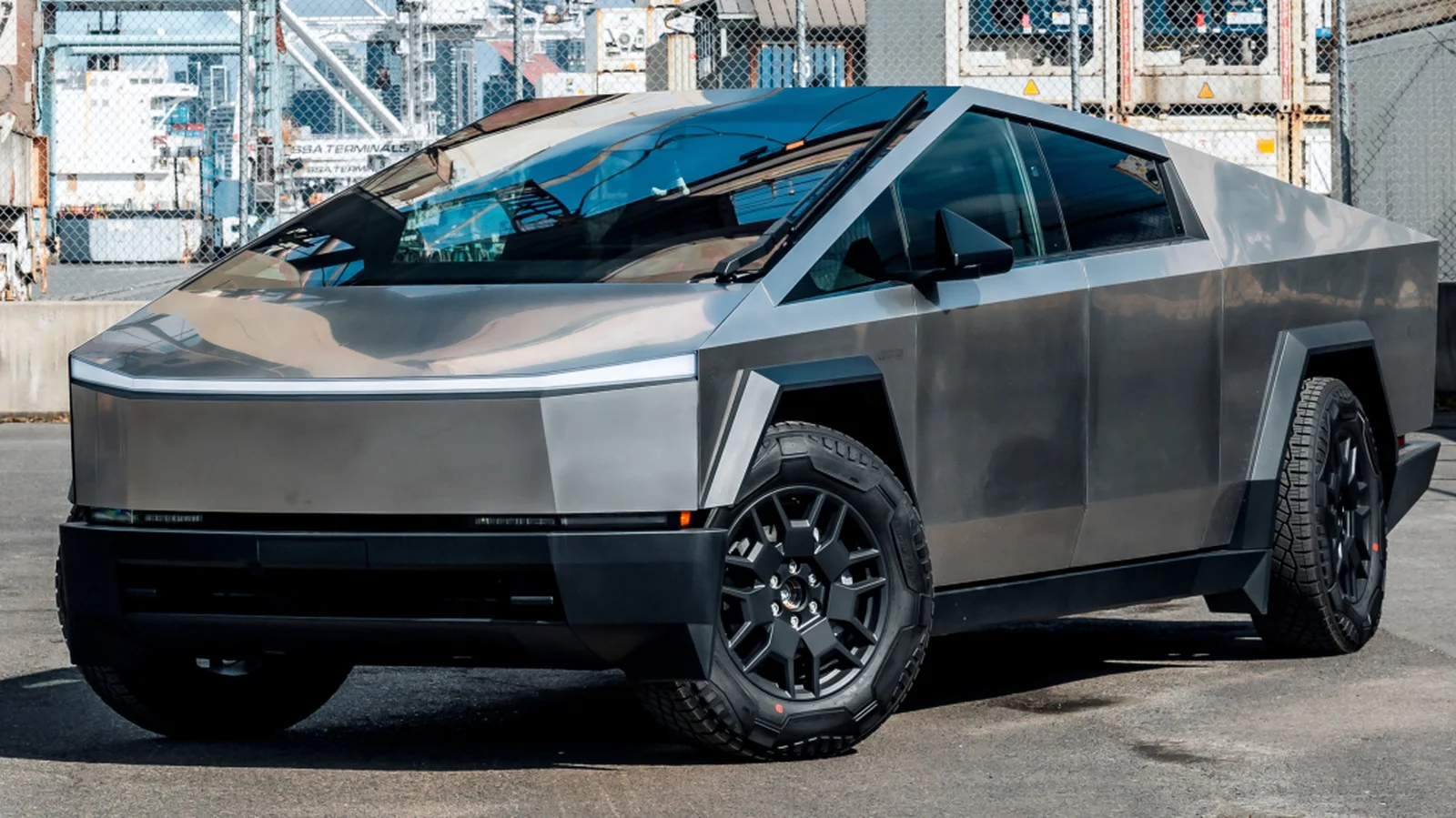
Tesla’s proposed suspension “ramp mode” could make loading heavy cargo into a pickup bed easier by changing the truck’s angle. A patent application published about a week before the source article’s Nov. 2, 2026 report describes raising the front and lowering the rear, reducing the steep transition from a loading ramp to the bed. The idea addresses a familiar problem for pickup owners: a ramp has to bridge the ground and the bed, and a sharp change in angle can make that climb awkward for both equipment and the person guiding it.
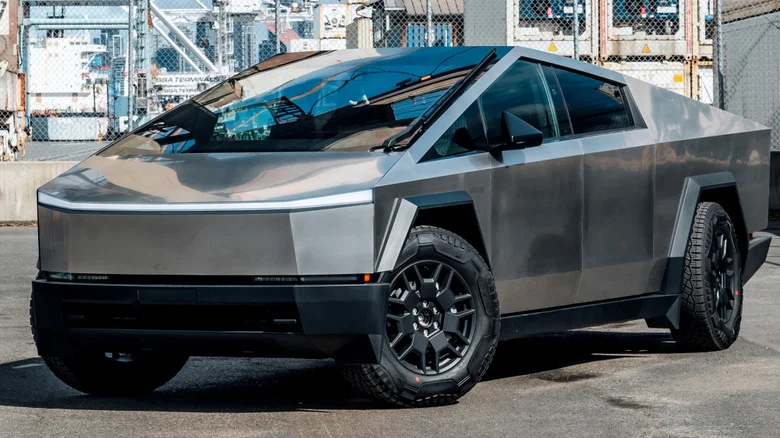
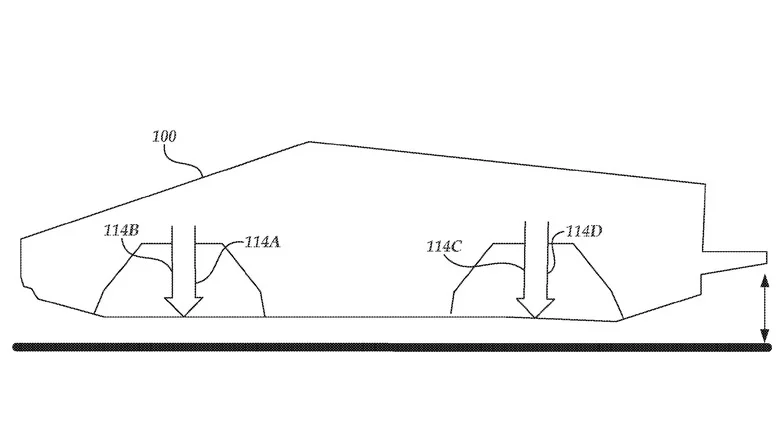
The filing, US 2026/0326744 A1, is titled “Adjustable Suspension For A Vehicle.” Its drawings show the Cybertruck, including the new lower-cost model, but Tesla describes the system broadly rather than limiting it to that pickup. The concept could help when loading a motorcycle or ATV, and lowering the back could let owners use a shorter ramp. That matters because ramp length, available space, and the height of the truck bed all shape how manageable loading feels; changing the vehicle’s stance could address part of that geometry without changing the cargo itself.
Tesla’s example would raise the front by 80 mm (3.1 inches) and lower the rear by 70 mm (2.8 inches). The company says that adjustment could reduce the ramp-to-bed angle from 45–55 degrees to 20–30 degrees. That’s a substantial change in the geometry, and it gives the proposal a clear practical purpose rather than treating adjustable suspension as a styling trick. Still, the filing doesn’t establish how the setup would perform with specific vehicles, ramps or loads. An angle on a patent drawing can describe the intended benefit; it can’t tell owners how a motorcycle’s ground clearance, ramp grip, or loading balance would behave in a particular driveway.
Controls and safeguards
The patent describes separate adjustments at each wheel, with controls available through an onboard interface or a smartphone. That flexibility could help owners set the truck on uneven ground, where one uniform adjustment may not leave the bed at a useful angle. If you’re working in this space, the wheel-by-wheel control is the more revealing part of the proposal: it suggests Tesla is thinking about suspension as a tool for stationary tasks, not only ride comfort or handling on the road.
Tesla also proposes safeguards. The vehicle would remain in Park, apply its parking brake and block shifts into Drive, Reverse or Neutral while ramp mode is active. Sensor readings could prevent or delay an adjustment when conditions aren’t suitable. That’s sensible on paper, because changing ride height while a vehicle is moving or poorly positioned could create problems; the filing, though, doesn’t show how the system would judge every possible surface or loading situation. (And this is the part most people overlook.) A useful mode depends as much on clear operating limits as on the suspension movement itself.
Other proposed suspension settings include “dump mode,” which lowers all four corners to bring the bed closer to the ground, and a leveling mode for uneven campsites or tailgating spots. These features point to a broader pitch: one adjustable system could serve several jobs around the truck, from loading to parking on irregular ground. A pickup owner may value that versatility, but each mode also adds controls and decisions. Simple in concept. More involved in execution.
Tesla filed a related adjustable-suspension application in November 2019, so this proposal builds on an earlier idea. That history shows the company has considered this general approach before, but a patent filing alone doesn’t establish whether the design has advanced or whether it will reach a vehicle. The newer application’s specific ramp geometry makes the use case easier to understand; it still leaves the engineering and production questions open.
What the proposal would mean for owners
Patent filings show what a company has considered, not what it will sell. Tesla has, however, said that two other recently reported patent ideas—a fan-assisted suction system and an adjustable Roadster rear spoiler—were slated for production after a Roadster demonstration in mid-October. That gives the suspension filing some context, but it doesn’t establish that this particular idea is headed for production. The numbers here describe a proposed change in angle, not a tested loading result.
This is more significant than it looks if Tesla can make the feature predictable and easy to use. A lower rear could reduce the physical awkwardness of loading bulky gear, while wheel-specific control might help when the truck isn’t on level ground. And yet, practical value will depend on details the filing doesn’t settle: how the system behaves with different cargo, whether owners can judge when ramp mode is appropriate, and how the adjustment fits into normal vehicle operation.
For now, the proposal is a useful glimpse at how adjustable suspension might serve a pickup beyond ride height and comfort. Whether this concept follows Tesla’s other stated production ideas remains unclear; its appeal will depend on whether the company turns the loading geometry into a production feature that works reliably outside the patent drawings.
Discussion
Sign in to join the discussion.