Toyota’s lowered Crown Signia GT-S gets custom bodywork, Lexus brakes and 21-inch wheels, but keeps its 238-hp hybrid powertrain.
A performance look built around restraint
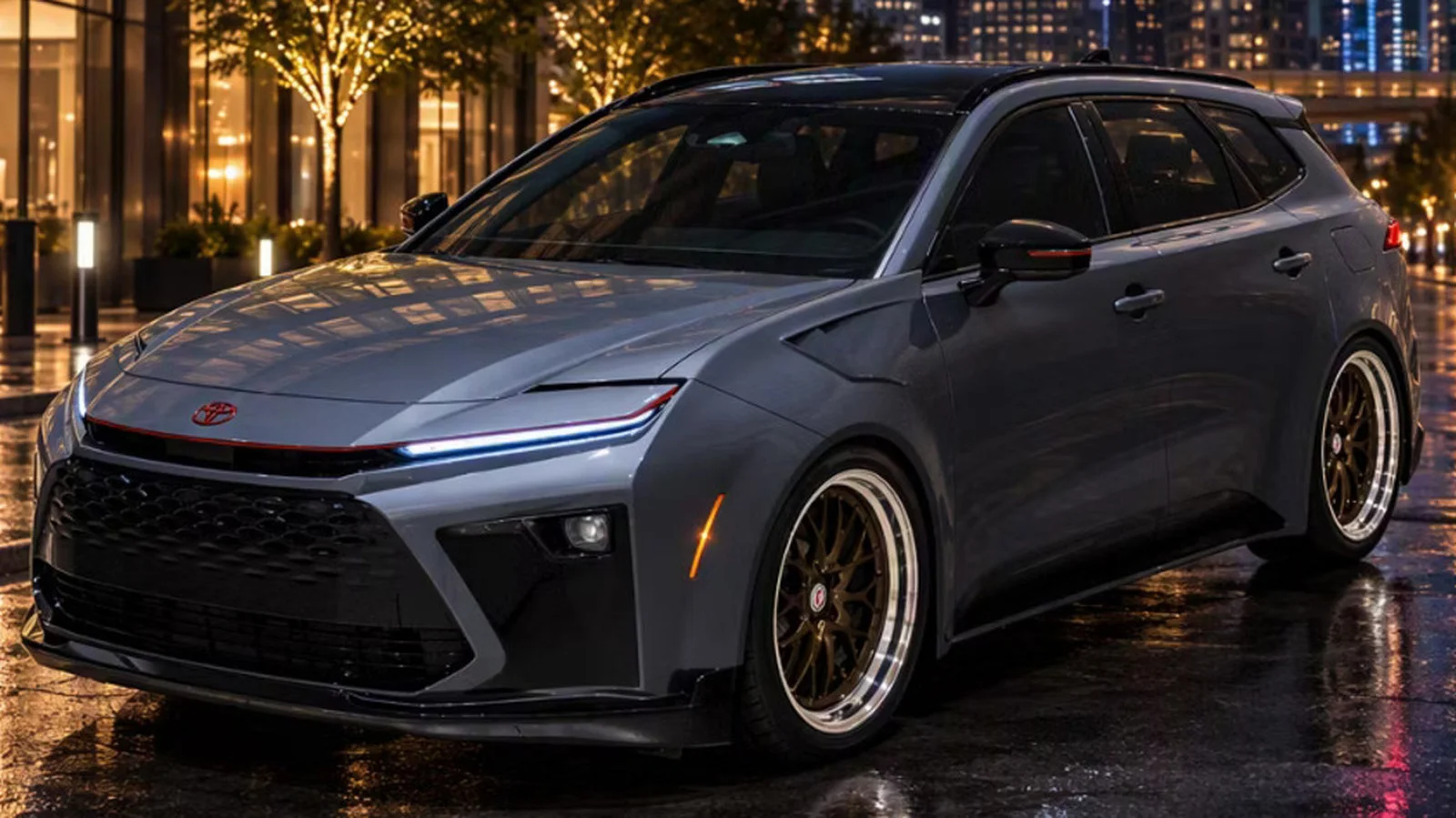
Toyota’s Crown Signia GT-S concept makes its performance pitch through stance, brakes and bodywork. The one-off show car keeps the standard hybrid powertrain, so its track-inspired appearance comes with no increase in horsepower. Toyota plans to display it at the 2026 SEMA Show in Las Vegas, where custom builds often test how far a familiar production vehicle can be pushed through changes to its design and hardware.
That makes the GT-S an exercise in emphasis. Toyota’s modifications give the crossover a lower, wider and more assertive profile, while the unchanged powertrain sets a clear limit on what “performance” means here. The concept may feel more focused on the road, but its visual message runs ahead of the evidence about speed.
Lower stance, broader bodywork
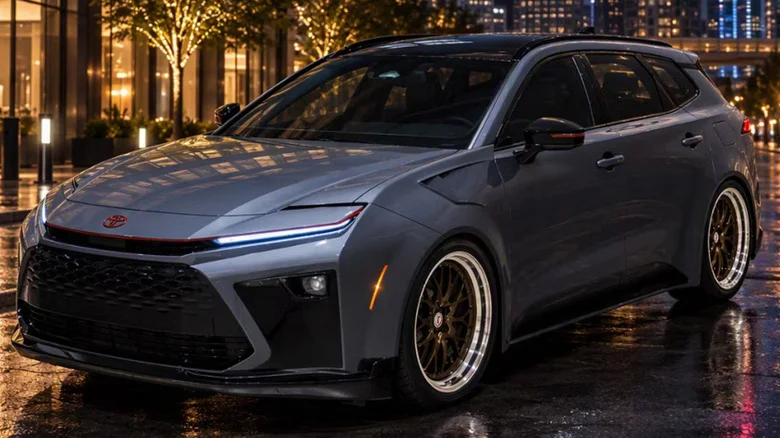
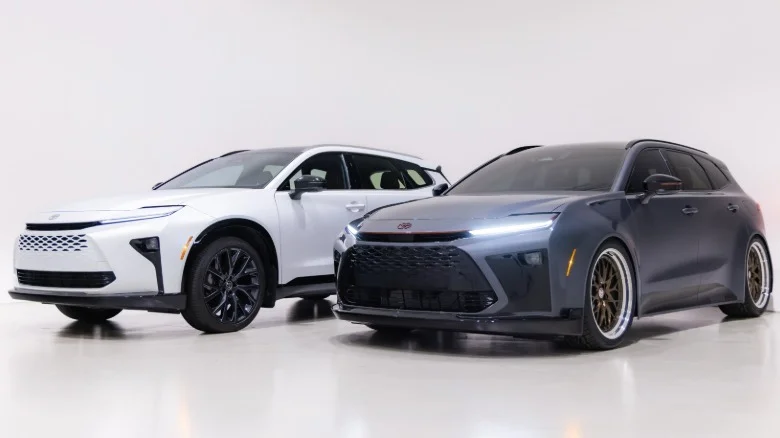
The project comes from Toyota Motorsports Garage, which has lowered the crossover by five inches with MCS coilovers. Toyota says the suspension changes are intended to sharpen handling, while the dramatic drop gives the Signia a much lower, more road-focused profile. A change that large also shapes the car’s character before it moves: the reduced ride height makes the GT-S look less like a family crossover and more like a custom road car.
Coilovers can allow suspension height and damping to be tuned, but Toyota hasn’t provided details on spring rates, alignment, or how the setup behaves on ordinary roads. Those details matter. A lower center of gravity can support more controlled cornering, yet lowering a vehicle by five inches is a substantial alteration, and a show car’s stance alone can’t tell us whether it remains comfortable or practical in daily use.
A custom kit widens the front and rear fenders and adds a prominent front lip. The grille is blacked out, with red trim around the headlights. Front-fender louvers bring to mind high-performance sports cars, though Toyota hasn’t said whether they provide a functional aerodynamic or cooling benefit. Extended rocker panels, a diffuser and new tailpipes complete the exterior changes.
These parts establish a consistent visual theme: the Signia is meant to look planted and purposeful. But bodywork can signal performance without proving it. (And this is the part most people overlook.) Without information about airflow testing or measured handling gains, the louvers, lip and diffuser are best understood as design choices with potential technical roles, not confirmed performance upgrades.
Chassis upgrades, familiar hybrid power
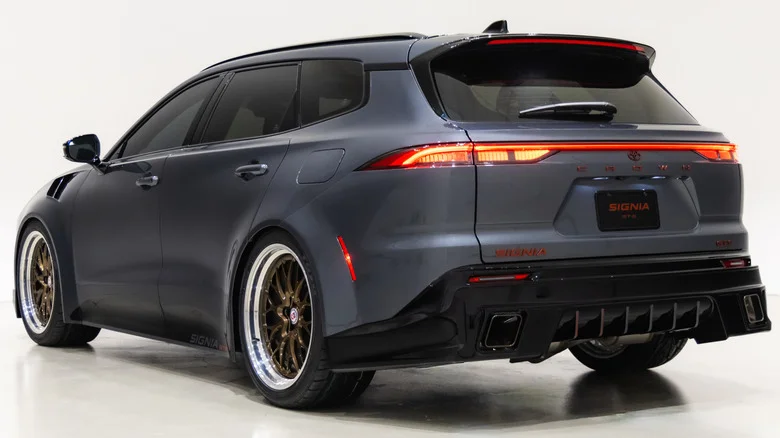
The finish is a dark gray metallic with extra clear coats for a deeper gloss. Lexus RX 500h F Sport brakes sit behind 21-inch HRE wheels, and the cabin gets black leather seats with GT-S branding. A red GT-S logo also marks the electronic shifter. Together, those changes give the concept a more deliberate identity inside and out, while the larger wheels and upgraded brakes suggest Toyota wants the chassis hardware to carry some of the performance argument.
Brakes are a meaningful part of a performance package: they affect how confidently a vehicle can slow down, especially when driven hard. Still, fitting components from another model doesn’t tell us how the complete setup performs on the Crown Signia. Wheel and brake fitment, tire choice and tuning all shape the result, and Toyota hasn’t supplied test data for this concept.
Underneath, the concept retains the Crown Signia’s 2.5-liter four-cylinder hybrid system, electronically controlled CVT and 238 horsepower. That output should suit Toyota’s stated aim of a family car able to handle school runs and canyon roads, but it leaves the GT-S without a powertrain change to match its visual message. Toyota could have made a more substantial performance statement with its turbocharged 1.6-liter three-cylinder from the GR Corolla; for now, the concept’s transformation is chiefly about handling and appearance.
That distinction is central to judging the car. The suspension and brakes may change how the Signia responds, while the hybrid system keeps its familiar balance of power and everyday use. But without added output, the GT-S isn’t a faster Signia in the straightforward sense many readers may expect from a performance badge. A sharper-feeling crossover, perhaps. A power upgrade, no.
What the concept says about performance
The GT-S shows how a manufacturer can explore a sportier version of a practical vehicle without reworking its entire mechanical package. Toyota has chosen visible design changes and chassis hardware, leaving the hybrid system intact. That approach makes the concept an interesting styling and setup exercise, though it also places more weight on whether the suspension and brakes deliver a noticeable difference behind the wheel.
If you're working in this space, the useful question is what Toyota wants the GT-S to demonstrate: a family crossover can adopt a more focused road stance while keeping the powertrain that defines the standard model. That's a credible idea, but the concept’s strongest evidence is still what can be seen in its stance and components. The driving experience remains an open question.
This is more significant than it looks. Performance branding often promises a package, and buyers reasonably look for the engine, chassis and brakes to tell the same story. Here, the brakes and suspension carry that message; the unchanged output complicates it. A show car can make the case visually. Whether Toyota intends any of these changes to influence a production vehicle isn’t stated.
For now, the Crown Signia GT-S is best read as a focused custom build, not a preview of a confirmed production model. Toyota’s SEMA display will put the combination on view, but the available details leave room between the concept’s aggressive appearance and its measured performance. A lower stance. Bigger brakes. The same hybrid power.
Discussion
Sign in to join the discussion.