This Japanese fire command Land Cruiser pairs a seven-seat cabin and 4.5-liter inline-six with working emergency gear and 39,129 miles.
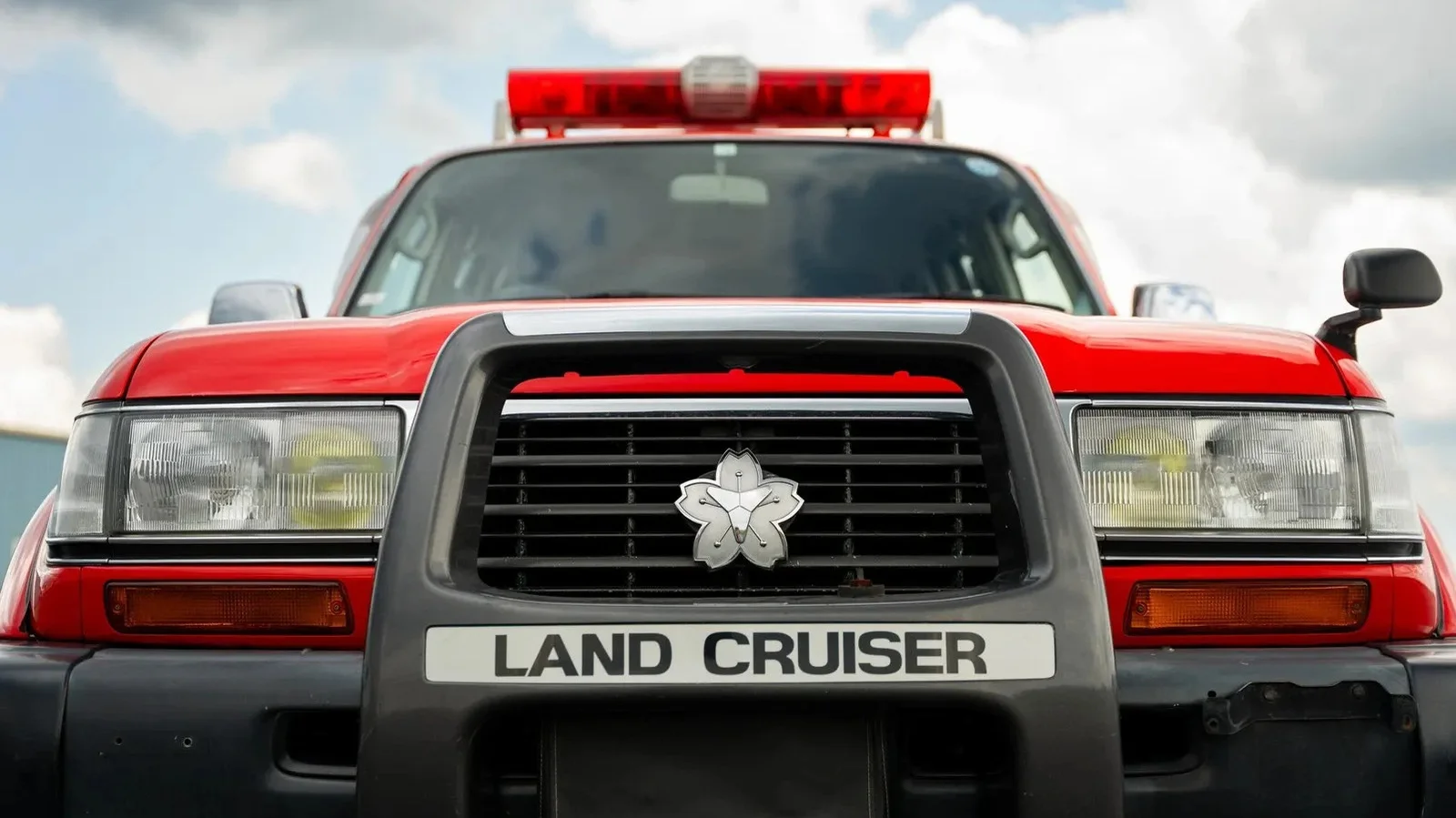
A retired Japanese emergency vehicle gives this 1997 Toyota Land Cruiser 80 Series an unusual identity, and its original equipment still works, according to the seller. Listed in Georgia for $29,995, the GX Fire Command has 39,129 miles and a clean Georgia title. Those details put it in familiar territory for a low-mileage 80 Series, but the emergency gear changes the question a prospective buyer has to answer: is this primarily a classic Toyota, or a preserved piece of working equipment?
The distinction matters because the vehicle’s appeal isn’t just visual. The seller says the roof lights, siren, radio and intercom remain operational, and that the Land Cruiser comes with an authenticated certificate. That’s an unusually specific feature set for a used SUV, though the listing’s claims still leave the practical details to verify in person. A buyer would want to understand what the certificate authenticates and how each system behaves now.
A command vehicle, not a fire engine
The GX Fire Command coordinated resources at emergency scenes rather than fighting fires, so it has no water tank. That role helps explain why the Land Cruiser remains an SUV in layout: it was meant to carry people and communications equipment, not a firefighting payload. The lights and siren are the most visible reminders of its former work, while the radio and intercom point to the less theatrical job of keeping people in contact.
That difference gives the vehicle a more specific story than a simple red paint job. Many former emergency vehicles are defined by equipment that’s been stripped away or left as decoration; here, the seller says the original systems still operate. If you're working in this space—or simply collecting unusual Japanese vehicles—the equipment may be the main attraction. It may also call for more careful inspection than a standard Land Cruiser, since functioning accessories are only useful if their condition and operation are clear.
Fire service details and seven-seat practicality
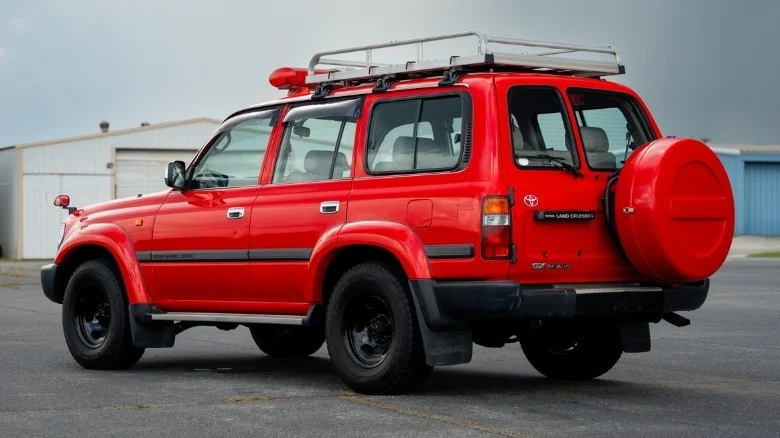
The red paint, roof-mounted emergency lights and cherry blossom-inspired fire department badge make the Land Cruiser’s former job clear. A front guard bearing Land Cruiser lettering, black steel wheels and chrome mirror caps give it a purposeful look. Unpainted bumpers contrast with body-colored fender extensions, while a roof rack, window rain guards and a matching spare tire cover round out the exterior. The result is distinctive without relying on a dramatic body conversion: much of the character comes from the markings and equipment the vehicle has retained.
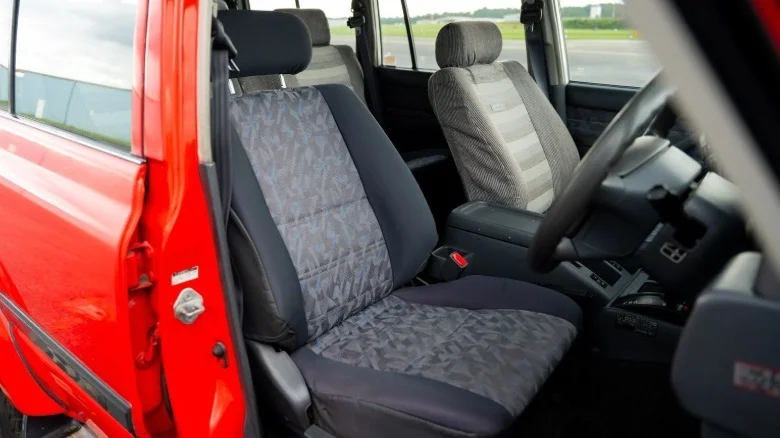
Inside, gray cloth upholstery and a seven-seat layout preserve the SUV’s family-hauling potential. That seating arrangement offers a reminder that the 80 Series was designed to carry people as well as tackle rough roads, even if this example’s emergency duty gave it a more specialized role. The driver’s seatback appears to be missing its cover, a visible blemish in an otherwise distinctive cabin. Small faults like this don’t tell the whole story of a vehicle’s condition, but they do make a close inspection more useful than relying on the listing photos alone.
Familiar 80 Series hardware
Power comes from Toyota’s naturally aspirated 4.5-liter 1FZ-FE inline-six, paired with a four-speed automatic and four-wheel drive. The listing doesn’t specify output; this engine typically made 212 horsepower and 275 lb-ft of torque in the 80 Series. That familiar drivetrain gives the vehicle a practical foundation beneath its unusual equipment, and the four-wheel-drive layout fits the model’s reputation among off-road enthusiasts.
A ladder frame, coil springs and solid axles at both ends provide the underpinnings expected of the model. This hardware is a large part of why the 80 Series remains appealing: the vehicle’s special history sits on a platform already valued for its capability. But age and condition still matter. The low odometer reading is an attractive figure, yet mileage alone can’t establish how an older vehicle was stored, maintained or used.
The seller, who says they’ve owned it for four years, describes the Land Cruiser as rust-free. That claim, the clean Georgia title and the stated mileage are useful starting points, while an inspection would help establish the condition of the frame, drivetrain and retained emergency systems. The seller’s account is a central part of the listing, and buyers will need to decide how much weight to give it alongside the vehicle itself.
What makes this example worth a closer look
This is more significant than it looks: the Land Cruiser’s appeal comes from the combination of an established off-road platform and equipment tied to a specific former job. The siren and lights make an immediate impression, but the radio and intercom help explain what the vehicle actually did. Preserved purpose-built equipment can make a vehicle more interesting than a cosmetic tribute, provided it works as described.
And yet, the asking price is attached to a niche proposition. Some buyers will value the uncommon history and want the equipment intact; others may prefer a more conventional 80 Series with fewer specialized components to assess. The seven-seat cabin and familiar mechanical layout preserve some everyday usefulness, but the most distinctive features are also what make this particular truck less interchangeable with ordinary examples.
Here's the thing: the listing’s strongest case is its specificity. A Japanese fire command vehicle, with low stated mileage, working original equipment and a clean title, has a clear identity. The numbers here are underwhelming only if you judge it as a standard used SUV; the real question is whether the story and preserved gear justify the asking price for the person considering it. A rare combination. The appeal hinges on whether a buyer wants the emergency equipment as much as the classic Toyota capability.
Discussion
Sign in to join the discussion.