A chopped-down Corolla Cross mule may preview Toyota’s platform for future EVs, hybrids and plug-in hybrids, due to reach the road next year.
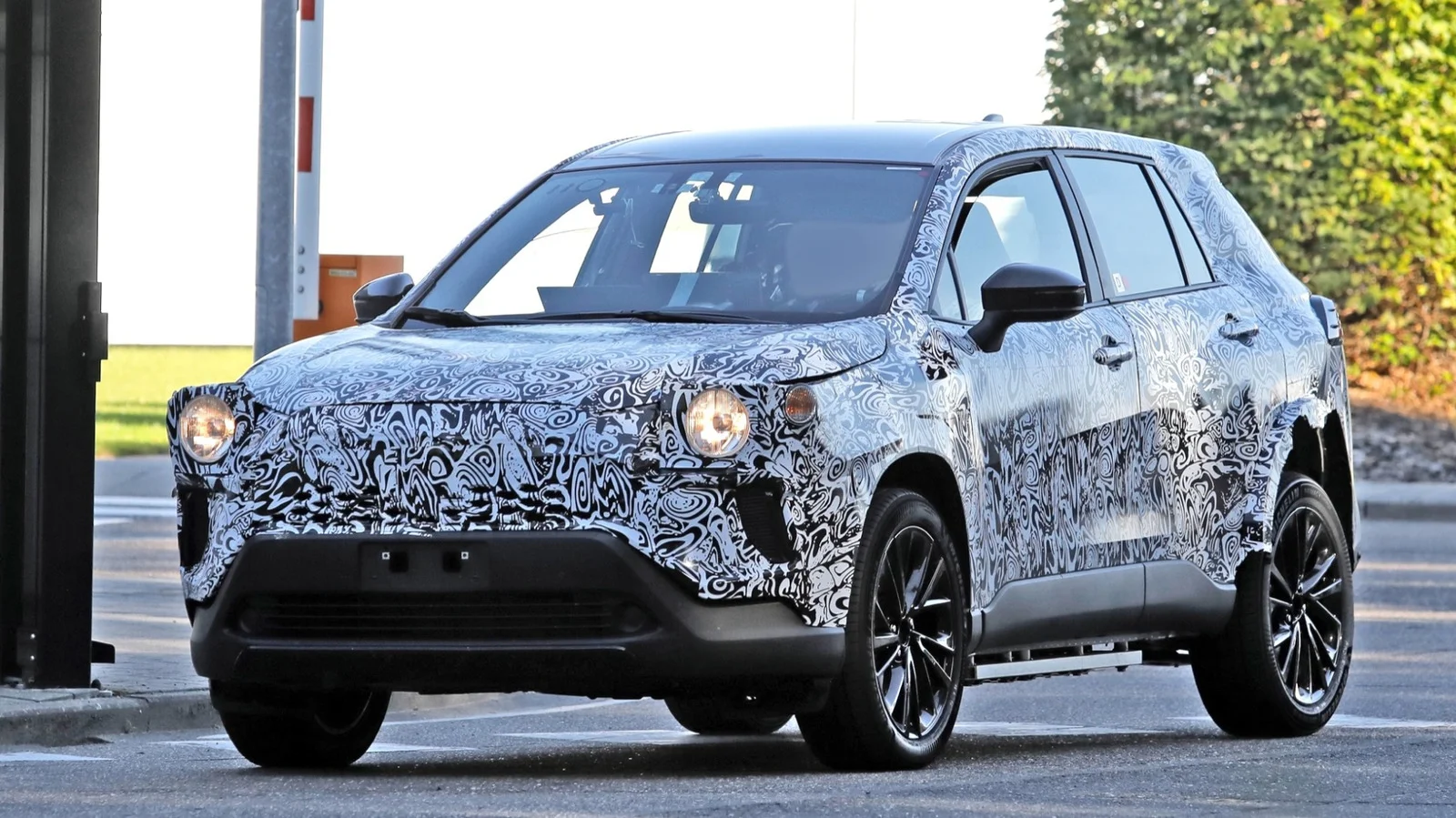
Toyota’s latest test vehicle points to a possible shift in how the automaker develops electric and hybrid models. The SUV mule wears modified Corolla Cross bodywork, but its shortened proportions and visible chassis details suggest the vehicle beneath the disguise isn’t simply a new version of that production SUV. It may be testing Toyota’s next platform, designed to support several kinds of powertrain. That distinction matters: a development mule can reveal the engineering direction of a project while saying very little about the final vehicle’s design or name.
The timing adds context. Toyota revealed its next-generation vehicle architecture the day before spy shots of the mule appeared. That sequence makes a connection between the prototype and the new platform plausible, though it doesn’t confirm one. The unusual headlights, missing exhaust and exposed frame all set the test vehicle apart from a production Corolla Cross. Its wheelbase is well under the current model’s 103.9 inches (2,640 mm), another sign that the familiar body panels may be hiding a different underlying package.
A test bed beneath familiar bodywork
This isn’t an electric version of the existing Corolla Cross, which arrived in North America in late 2021 and received a facelift for model year 2026. It’s a development mule: a modified production vehicle used while purpose-built prototypes are still in the works. Automakers often use this kind of temporary bodywork to test components before a finished vehicle is ready to be seen. The disguise makes the prototype harder to identify, but it also means the exterior offers limited evidence about what Toyota ultimately plans to sell.
The clues are in the proportions and visible structure. A wheelbase far shorter than the current Corolla Cross’s points away from a straightforward carryover, while the missing exhaust is consistent with testing a vehicle that doesn’t need one. Neither detail settles what powertrain is aboard: a spy photo can show exterior features, but it can’t establish the full engineering specification. What it does show is that Toyota is testing a package that differs from the production SUV wearing the borrowed panels.
That’s a useful distinction for readers trying to interpret early sightings. A mule can be built to answer engineering questions before designers and product teams settle on a finished vehicle. Its shape may reflect what parts were available for testing, rather than the dimensions or styling of the eventual model. This one may be connected to Toyota’s new architecture, but the images don’t identify the first production vehicle that’ll use it.
One architecture, several powertrains
Toyota calls its upcoming approach “multi pathway.” Today, the automaker’s combustion and hybrid models generally use TNGA architecture, while its electric bZ models sit on the distinct e-TNGA platform. The new system is intended to bring EV, hybrid and plug-in hybrid powertrains onto a shared set of hardware. In practical terms, that means Toyota is aiming to build vehicles with different propulsion systems around a common architectural foundation.
That plan reflects a particular view of the transition to electric vehicles. Instead of shifting every model to battery power at once, Toyota is preparing for a product range that includes several powertrain types. A shared platform could help the company adapt production as demand changes among them, because factories and vehicle components may be organized around common elements. The details of how much hardware will be shared, and how much flexibility the factories will gain, aren’t established by the information available so far.
There’s a tradeoff to watch. A common platform can simplify parts of development and manufacturing, but it still has to accommodate requirements that differ across EVs, hybrids and plug-in hybrids. Battery placement, engine packaging and vehicle proportions can impose competing demands. Toyota says the shared approach won’t compromise individual powertrains; the claim is clear, but the mule alone can’t show whether the finished vehicles will support it. That’ll become easier to assess when Toyota reveals production designs and specifications.
For Toyota, a common platform could make it easier to adjust factory output as demand shifts among powertrain types. It also opens the possibility of an all-electric Corolla, though the mule itself doesn’t confirm which model will use the architecture first. The idea is plausible within Toyota’s stated plan, but possibility shouldn’t be confused with a product announcement. The disguised SUV may be a platform test, a test for a particular vehicle, or both.
What the engine changes signal
Toyota says hybrid and plug-in hybrid models using the new approach are expected to use 15 percent less fuel. It also plans a new 1.5-liter inline three-cylinder engine to replace the current 1.5-liter three-cylinder and 1.8-liter four-cylinder engines. Those are stated targets and hardware changes; the available details don’t specify which models will receive the engine first or how the expected fuel savings will vary by vehicle.
The engine announcement broadens the significance of the platform. Toyota isn’t describing a system designed only to make battery electric vehicles easier to build. It’s pairing new architecture with changes to combustion engines and hybrid systems, which suggests the company wants efficiency gains across more than one part of its lineup. The test vehicle’s missing exhaust doesn’t answer how those engine plans connect to this particular mule. A single prototype shouldn’t be treated as a preview of every powertrain Toyota intends to put on the platform.
The 15 percent fuel-use reduction is a target readers can track, but its value will depend on the vehicles and conditions used for comparison. Without those details, it’s too early to translate the figure into a specific customer benefit. Still, Toyota is putting a concrete efficiency goal beside its platform strategy. That makes the eventual production specifications more revealing than the company’s broad description of a shared architecture.
What to watch next
The new engines and platform are expected to reach the road next year. More sightings should help clarify how Toyota turns the shared architecture into distinct vehicles, and whether this compact SUV mule points to a future electric Corolla Cross. For now, the clearest facts are the timing of the architecture announcement, the mule’s unusual dimensions and Toyota’s stated plan to support several powertrains on common hardware.
This is more significant than it looks: Toyota is presenting its next step as a way to manage several propulsion options within one development strategy. If you’re working in this space, the useful question isn’t just whether a particular model becomes electric; it’s whether the shared platform can support different vehicles without compromising their individual powertrains. (And this is the part most people overlook.) The factory flexibility Toyota expects will matter too, though the company hasn’t described exactly how it’ll work.
And yet, a development mule can’t settle those questions. The recycled bodywork conceals the final proportions, while the images don’t identify the model that’ll arrive first or confirm the vehicle’s powertrain. More evidence will come from later prototypes and production details. For now, the Corolla Cross disguise is a clue about Toyota’s testing, not a promise about its next showroom model.
Discussion
Sign in to join the discussion.