Ford’s Mach-E SSV pairs an extended-range battery and dual motors with police-focused hardware, as U.S. departments add more electric patrol vehicles.
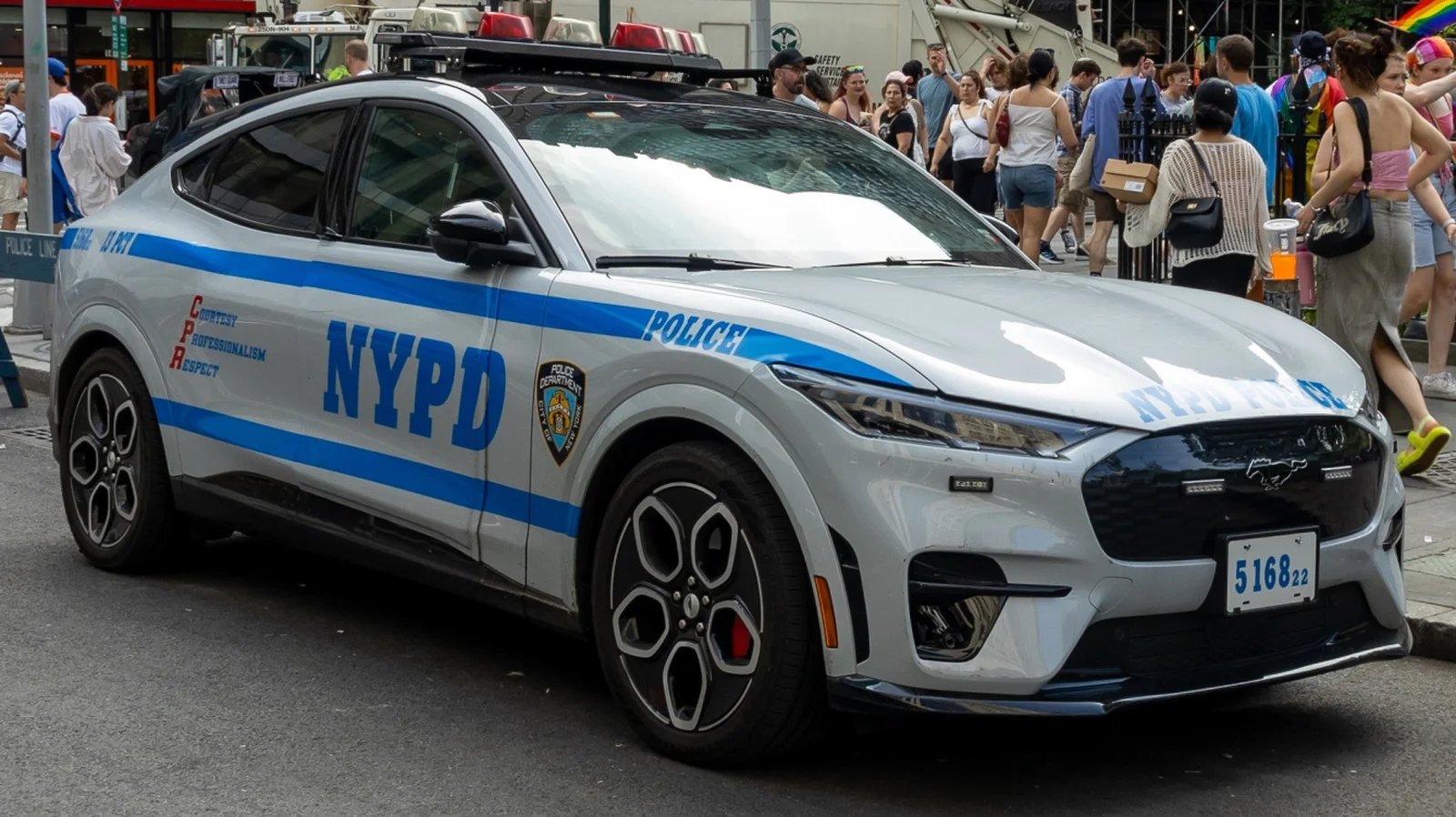
Ford is giving police departments a factory-built electric Mustang Mach-E, aiming to make the SUV easier for agencies to adopt and outfit for patrol. The Special Service Vehicle (SSV) joins the updated 2027 Mach-E range and uses the entry-level Select trim as its starting point, with performance hardware drawn from higher-spec versions. That combination reflects a practical pitch: departments can start with a vehicle configured for police use, then decide how much additional equipment their own work requires. The factory-built approach may also reduce the amount of conversion work agencies need to arrange, though Ford hasn’t detailed what equipment will be available from the factory or how much the SSV will cost.
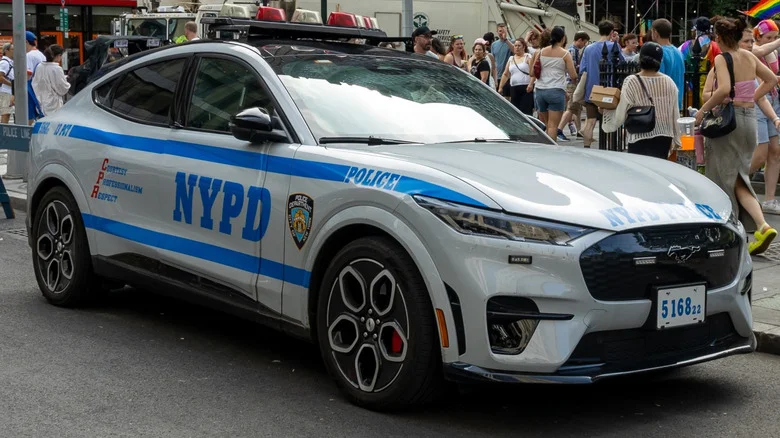
The SSV is expected to use the available 91-kWh extended-range battery and two electric motors, according to Ford Authority. Ford hasn’t confirmed the motors’ output, so the vehicle’s performance remains an open question. The Select and Premium all-wheel-drive models can reach 370 horsepower, while the GT is rated at 480 hp; GT badges on the SSV suggest it may use the more powerful setup, though that remains unconfirmed. Badging is a clue, not a specification sheet.
For departments, the unanswered details matter beyond bragging rights. Power can shape how a vehicle feels under acceleration, but police buyers also need to consider how the vehicle will perform with equipment and officers aboard, and how its range fits their patrol patterns. The source information doesn’t provide those answers. Until Ford confirms output and other operating details, the SSV’s place between a standard Mach-E and a GT remains a matter of inference.
Performance equipment, with room for agency upgrades
The police model gets 20-inch aluminum wheels, Brembo front brakes with red calipers, dedicated front and rear fascias, and a gloss-black grille shield. Ford also includes Co-Pilot360 Active 2.0, front parking sensors, and a drainable front trunk. Those features give the SSV a distinct hardware package, combining braking and driver-assistance equipment with design changes intended for the police version. The drainable front trunk may be useful for cleaning, though Ford hasn’t described its intended role or any limits on what it can hold.
The Select-based configuration leaves out some upscale features, a practical fit for departments planning their own equipment changes. Police vehicles often need additions for communications, visibility, storage, and other department-specific needs. A less elaborate starting trim can leave agencies more control over where they spend, although the SSV’s final cost and available options haven’t been announced. If you’re working in this space, the useful question isn’t just what Ford includes; it’s what agencies can add without complicating the vehicle’s day-to-day use.
Unbridled mode is included, sharpening accelerator response, adjusting steering, and increasing regenerative braking. Those changes alter how the Mach-E responds to the driver, but they don’t establish how the SSV will be tuned for patrol or whether departments will prefer that mode for routine use. Ford hasn’t released images of the production SSV. Its appearance may recall the Mach-E prototype Michigan State Police tested in 2021, but the earlier test vehicle doesn’t confirm what the production model will look like.
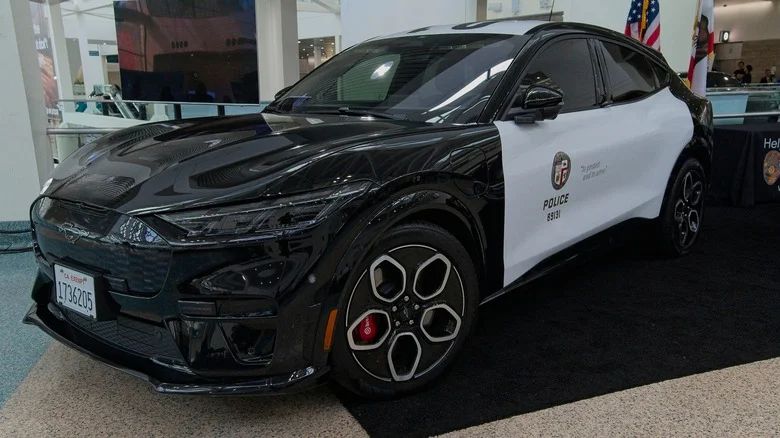
Dearborn, Michigan, officers received several Mach-E GTs earlier this year, with a focus on addressing reckless and aggressive driving. The new SSV gives other departments a purpose-built route to a similar electric patrol vehicle. That’s a meaningful distinction: a department’s ability to acquire a few electric SUVs doesn’t automatically mean it has a ready-to-order police version backed by the manufacturer. Still, the Dearborn vehicles are GTs, while the SSV starts with Select trim; the two examples shouldn’t be treated as identical configurations.
More electric vehicles enter police fleets
The Mach-E is one of several EVs finding a place in U.S. police fleets. Palo Alto’s department received a patrol-ready Rivian R1S last year. Las Vegas police have also received modified Cybertrucks, donated by tech entrepreneur Ben Horowitz and his wife. Each vehicle is expected to save the department $8,800 to $12,000 in annual fuel costs. These examples show that electric patrol vehicles are reaching departments through different routes, from purpose-prepared models to modified or donated vehicles. They don’t, by themselves, establish how widely EVs can serve every kind of police work.
Fuel costs are only one part of the decision. Agencies also have to weigh charging access, the time vehicles spend in service, and whether a particular vehicle can handle the demands of its assignment. The available information about the SSV doesn’t spell out how Ford expects departments to address those questions. That’s the part most people overlook: a police vehicle’s value depends on its fit with the department’s routines, not just its powertrain or purchase price.
What the SSV could mean for police fleets
Ford’s SSV gives departments another option for evaluating electric patrol vehicles, with a factory-built configuration and hardware drawn from more performance-oriented Mach-E models. The numbers here are underwhelming in one respect: Ford hasn’t yet supplied the SSV’s output, price, or a fuller account of its police-specific equipment. Those omissions make it difficult to compare the model with other fleet choices on anything beyond its announced features.
That said, the move signals that automakers can package an existing electric SUV for a specific fleet buyer instead of leaving every department to adapt a consumer vehicle on its own. This is more significant than it looks, because a purpose-built starting point can make procurement and outfitting simpler for agencies that want to assess an EV. Whether that translates into wider adoption will depend on practical details Ford hasn’t shared, including confirmed performance and how the vehicle fits each department’s operations.
Ford’s SSV is a clearer proposal than a prototype or a one-off conversion. The unanswered questions are still the ones that will determine its appeal.
Discussion
Sign in to join the discussion.