Brabus gives its limited-run G-Class pickup 888 hp, a lowered ride and a heavily reworked carbon-fiber body.
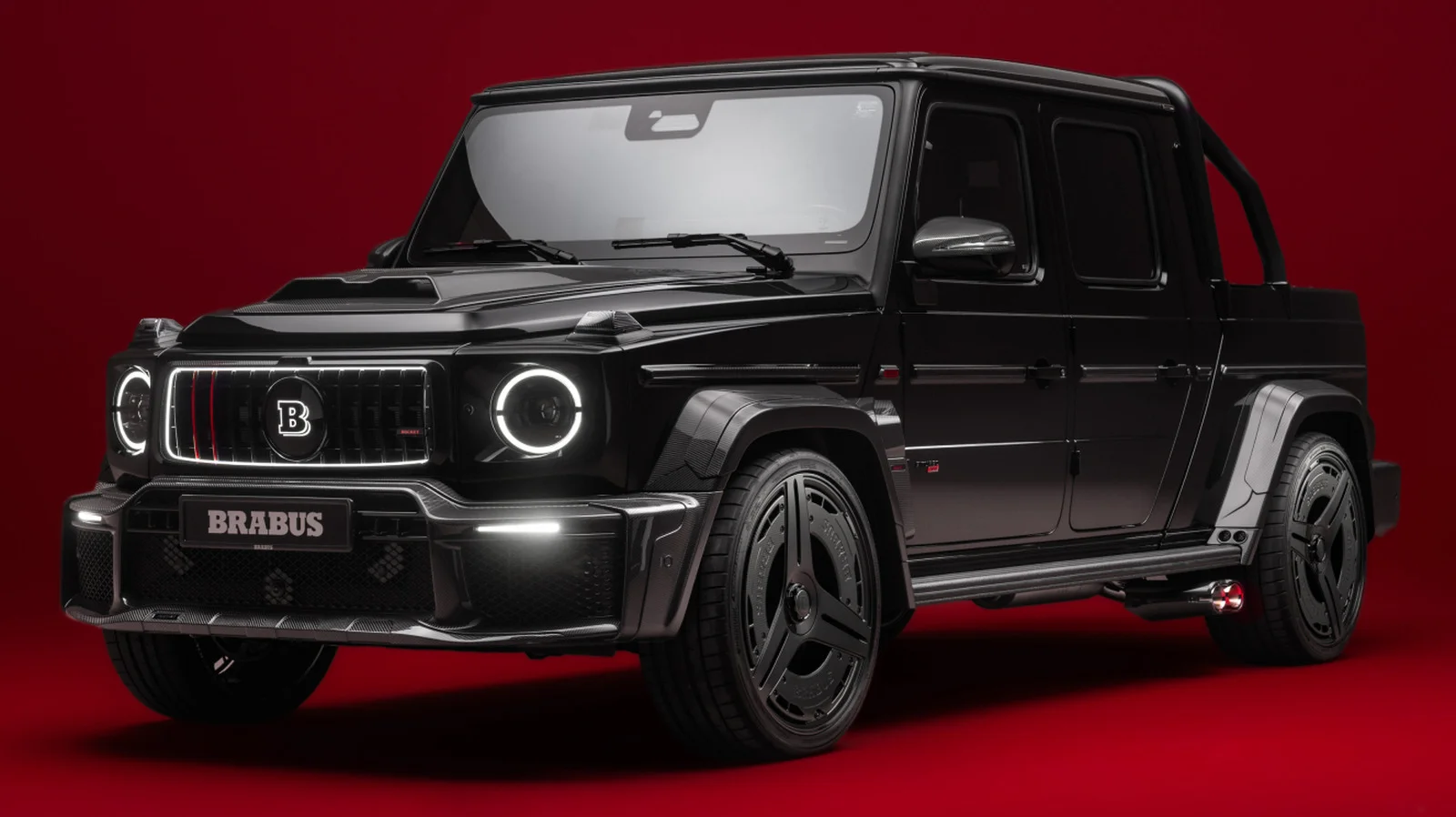
Brabus has turned the Mercedes-AMG G 63 into a pickup with 888 horsepower, though the P 900 Rocket Edition looks built more for attention on pavement than work in the bed. Its lowered suspension, 24-inch wheels and extensive carbon-fiber trim point to a road-focused showpiece with a truck’s silhouette. That distinction matters: the conversion borrows the visual language of a pickup without establishing that it can do much pickup work.
The G-Class already carries a strong identity as a boxy luxury SUV with off-road credentials. Brabus’s version shifts the emphasis toward speed, custom styling and exclusivity, while retaining the familiar upright shape. The result is an unusual mix of cues: a high-riding vehicle’s basic outline, a sports car’s performance claims and a bed that appears secondary to the design.
A pickup bed with limited evidence of utility
The conversion adds a steel bulkhead behind the rear seats, complete with a heated window. Metal forms the bed floor and tailgate, while the side panels use lightweight carbon fiber. These details describe how Brabus has built the rear section, but they don’t answer the practical questions a buyer might ask about it.
Brabus hasn’t published a cargo capacity, and the setup seems more suited to carrying a visual statement than a serious load. That gap leaves the truck’s everyday usefulness difficult to judge: the materials and layout are clear, but the usable space and working limits aren’t. A pickup bed can signal utility even when the vehicle’s real purpose lies elsewhere.
 Brabus
Lowered stance, louder presence
The stance reinforces the road-focused impression. Aftermarket coilovers lower the G-Class by 1.8 inches, and the 24-inch wheels wear black spokes and carbon-fiber aerodynamic trim. Those choices affect more than appearance: a lower ride height and large wheels generally favor smooth, predictable surfaces over uneven trails, where ground clearance and tire sidewall can matter.
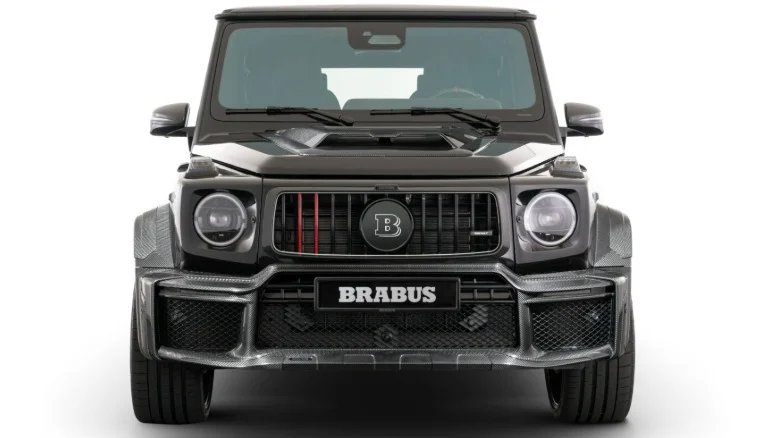
Brabus also reshapes the body with a front bumper featuring larger air intakes, a black grille with an illuminated emblem, a new hood and flared carbon-fiber wheel arches. Side steps, red-glowing tailpipes and a matte-black steel sports bar complete the exterior changes. Each piece adds to the truck’s visual presence, though the combined effect is closer to a customized show vehicle than a restrained utility conversion.
That’s a sharp departure from the G-Class’s off-road image. Brabus has described the P 900 as a road-focused supercar, though its size and pickup conversion make that label a stretch. The suspension and wheel package suggest smooth roads will suit it better than rough trails. This is more significant than it looks: the styling makes a promise of performance, while the pickup shape hints at usefulness, and the published details lean much more heavily toward the first.
A larger V8 delivers 888 horsepower
Under the new hood, the G 63’s twin-turbo V8 grows from 4.0 to 4.4 liters. Brabus increases the cylinder bores to 3.3 inches (84 mm) and adds forged pistons, a billet crankshaft and larger turbochargers running at 20 psi. An upgraded fuel system, new downpipes and a stainless-steel exhaust support the engine changes.
The list points to a substantial engine rebuild, rather than a software adjustment alone. The larger displacement and revised hardware provide context for the headline output, while the exhaust and intake-related changes are part of the broader package. Still, the figures describe power and torque, not how the truck behaves in everyday driving or under sustained heavy use.
With a tuned ECU, the engine produces 888 horsepower at 6,200 rpm and 922 lb-ft (1,250 Nm) at 2,900 rpm. Brabus limits torque to 774 lb-ft (1,050 Nm) to protect the transmission. The company claims a 0-to-62-mph (100-km/h) time of 3.7 seconds, though it hasn’t listed the vehicle’s curb weight.
That missing weight matters when interpreting the acceleration claim. Without it, readers can’t easily compare the P 900 with other high-performance vehicles or assess what the pickup conversion adds to the G 63’s mass. The claimed time is striking on paper. A curb-weight figure would make it easier to understand.
A cabin built around the same showpiece idea
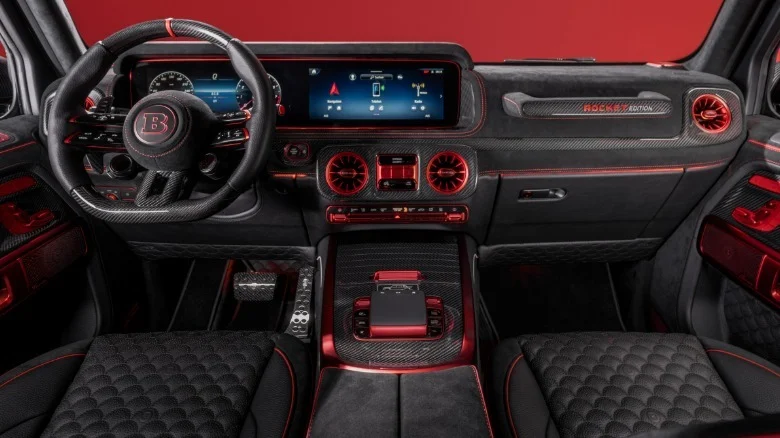
The cabin gets leather, genuine Alcantara and red quilted stitching. Red accents carry across the door handles, air vents and speaker grilles, while carbon-fiber details appear throughout. Brabus also modifies the doors to open to 90 degrees and fits a new steering wheel.
The materials and color scheme extend the exterior’s emphasis on visibility into the cabin. The wider door opening may make entry and exit easier, but the article’s available details don’t establish how much the interior changes affect comfort or daily practicality. If you're working in this space, the useful distinction is between customization that changes the experience and customization that mainly reinforces the vehicle’s identity. Here, Brabus has made both part of the pitch.
Exclusivity is part of the product
Production is capped at 10 examples. Brabus lists the pictured truck at €711,718, or about $796,805, with the final price varying according to personalization. That price and limited run place the P 900 firmly in the territory of a bespoke statement vehicle, where rarity and the owner’s preferred specification are central to the proposition.
The P 900’s mix of supercar output and pickup styling makes its intended role clear: a rare, pavement-ready G-Class built to be noticed. And this is the part most people overlook: the bed doesn’t need to make the truck a practical work vehicle for the conversion to succeed on its own terms. It gives the G-Class a new silhouette, while the powertrain and cabin keep attention on performance and customization. That said, the unanswered cargo capacity and missing curb weight leave some basic questions for anyone trying to judge it beyond the showroom.
 Brabus
Discussion
Sign in to join the discussion.