A digital rendering combines Tesla Roadster details with the Hyundai Ioniq V’s sedan proportions, imagining a sportier successor to the Model S.
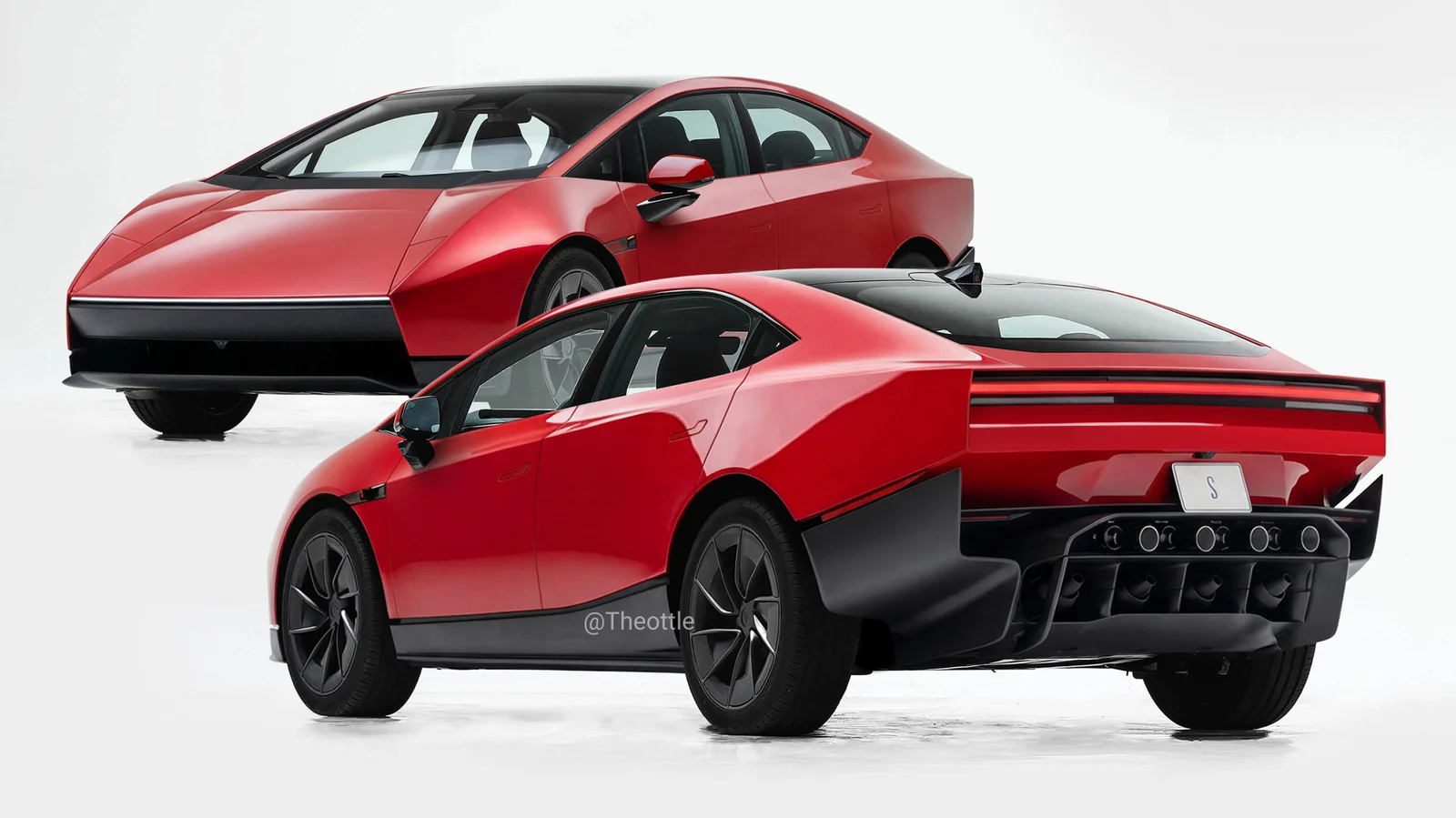
A Tesla sedan styled like the upcoming Roadster could give the Model S a sharper, more exotic direction. Digital artist Theophilus Chin’s rendering makes the case with a four-door fastback that borrows the Roadster’s angular design and echoes Lamborghini’s wedge-shaped sedans. It’s a design exercise, not a Tesla preview, but it raises a useful question: could a more dramatic shape give the company’s large sedan a clearer identity?
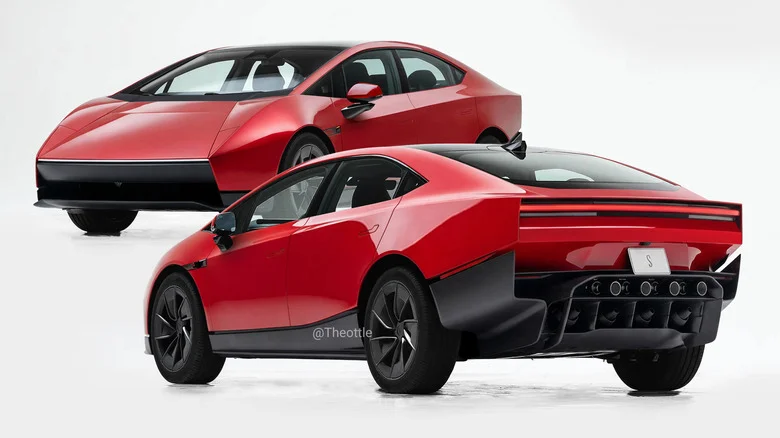
To translate the two-door’s styling into a longer body, Chin—also known as Theottle—started with the Hyundai Ioniq V, a production sedan whose profile already recalls a Lamborghini. The wedge-shaped base gave him room to adapt the Roadster’s design cues: a pointed front end, pop-down headlights, and a longer front overhang. Along the sides, the rendering adds a Roadster-like character line and Tesla’s pop-out door handles.
That choice of starting point matters. A two-door sports car can rely on a short cabin and dramatic proportions; a four-door has to make room for rear passengers while keeping its roofline and body sides visually coherent. The Ioniq V’s existing wedge shape gives Chin a plausible bridge between those demands. The result suggests how a design language might travel across body styles, though a rendering can resolve visual tensions that production engineering and passenger space would make harder.
Roadster details, sedan proportions
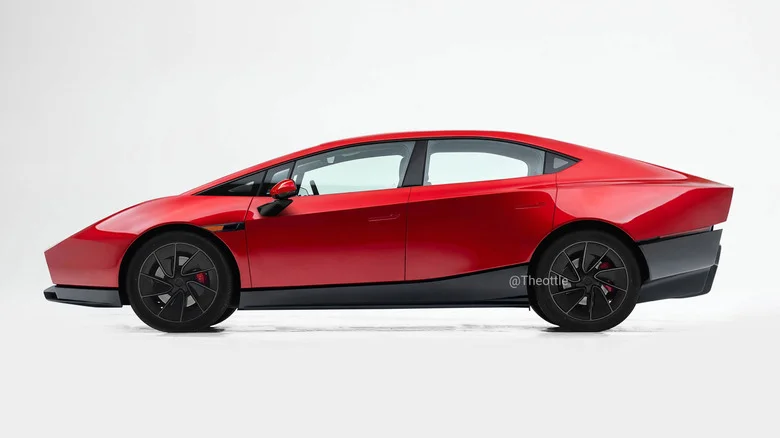
The stretched greenhouse and sloping roof give the concept a fastback silhouette. At the rear, a full-width LED light bar and quad outlets integrated into a large diffuser carry over the Roadster’s visual drama; an active rear wing doesn’t make the cut. The sedan looks broader and less sleek than the 2008 Lamborghini Estoque concept, but the styling could point toward a possible Model S successor if Tesla extended the Roadster’s design language across its lineup.
Those details do distinct jobs. The light bar creates a broad visual anchor, while the diffuser and quad outlets make the rear look closer to a high-performance machine than a conventional electric sedan. They’re styling cues in this rendering, though, and don’t establish anything about a real car’s powertrain or aerodynamic performance. The missing active wing is telling, too: Chin’s version favors a more integrated shape over one of the Roadster’s more conspicuous performance signals.
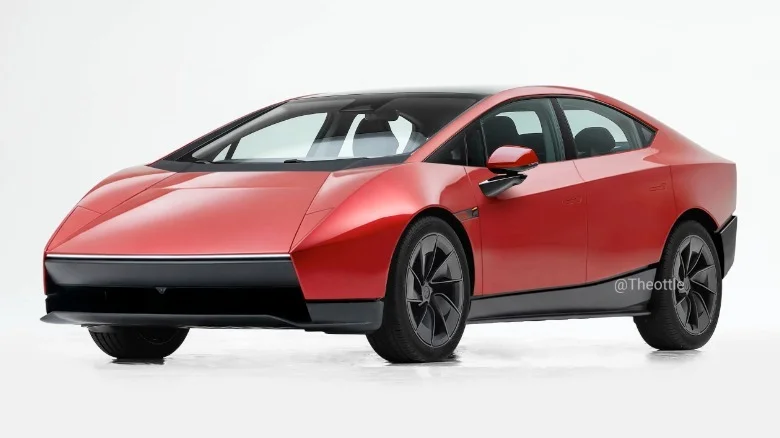
Performance is speculative, though Tesla’s Model S Plaid shows the company can deliver strong acceleration from electric motors. Chin joked that the sedan might not fly, but could flatten potholes with SpaceX technology. The joke captures the gap between the render’s visual fantasy and the details that would define a production car: power, ride quality, packaging, and whether the look could be built without compromising everyday use.
What the Roadster connection can—and can’t—tell us
The production Roadster is scheduled for 2028. Tesla says its $250,000 Thrust version will use cold-gas thrusters and reach 60 mph from a standstill in a claimed 0.81 seconds; only the invite-only Rocket trim is expected to perform the flying demonstrations. Those claims give the sedan concept a vivid reference point, but they don’t mean any of the Roadster’s hardware or performance will carry over to a four-door.
That distinction matters because the Roadster’s appeal rests partly on extremes. A sedan has a different job: it must work as a useful passenger car while still looking distinctive. If you’re working in this space, the challenge is familiar: translate a memorable design cue without making the larger vehicle feel like a stretched costume. A pointed nose or sharp shoulder line can travel between models; the proportions that make those cues convincing are harder to copy.
A sharper identity for Tesla’s sedan range?
For buyers drawn to the rendering’s Lamborghini-like shape, the Hyundai Ioniq V is a real, if less powerful, alternative in China. It starts at ¥109,900, or about $16,500. That comparison puts the concept’s appeal in perspective: the visual idea is not exclusive to Tesla, and a dramatic silhouette alone doesn’t establish a car’s performance or character.
The more compelling implication is what a Roadster-inspired design might do for Tesla’s sedan range: bring some visual theater to a segment where the Model S could use a fresh identity. This is more significant than it looks. A recognizable design direction could help a sedan feel distinct within a lineup, but the rendering offers no evidence that Tesla plans to make such a car.
Here’s the thing: a striking sketch can make a product gap easier to see, even when it doesn’t predict what a company will build. The Model S successor idea remains hypothetical. And yet, the rendering makes a persuasive case for carrying a few Roadster cues into a four-door: sharp, memorable, and still recognizably a sedan. Not a product announcement. A provocation.
Discussion
Sign in to join the discussion.