SSR Performance is turning a 911 GT3 RS into a twin-turbo track car, with more than 800 hp and Nürburgring records in its sights.
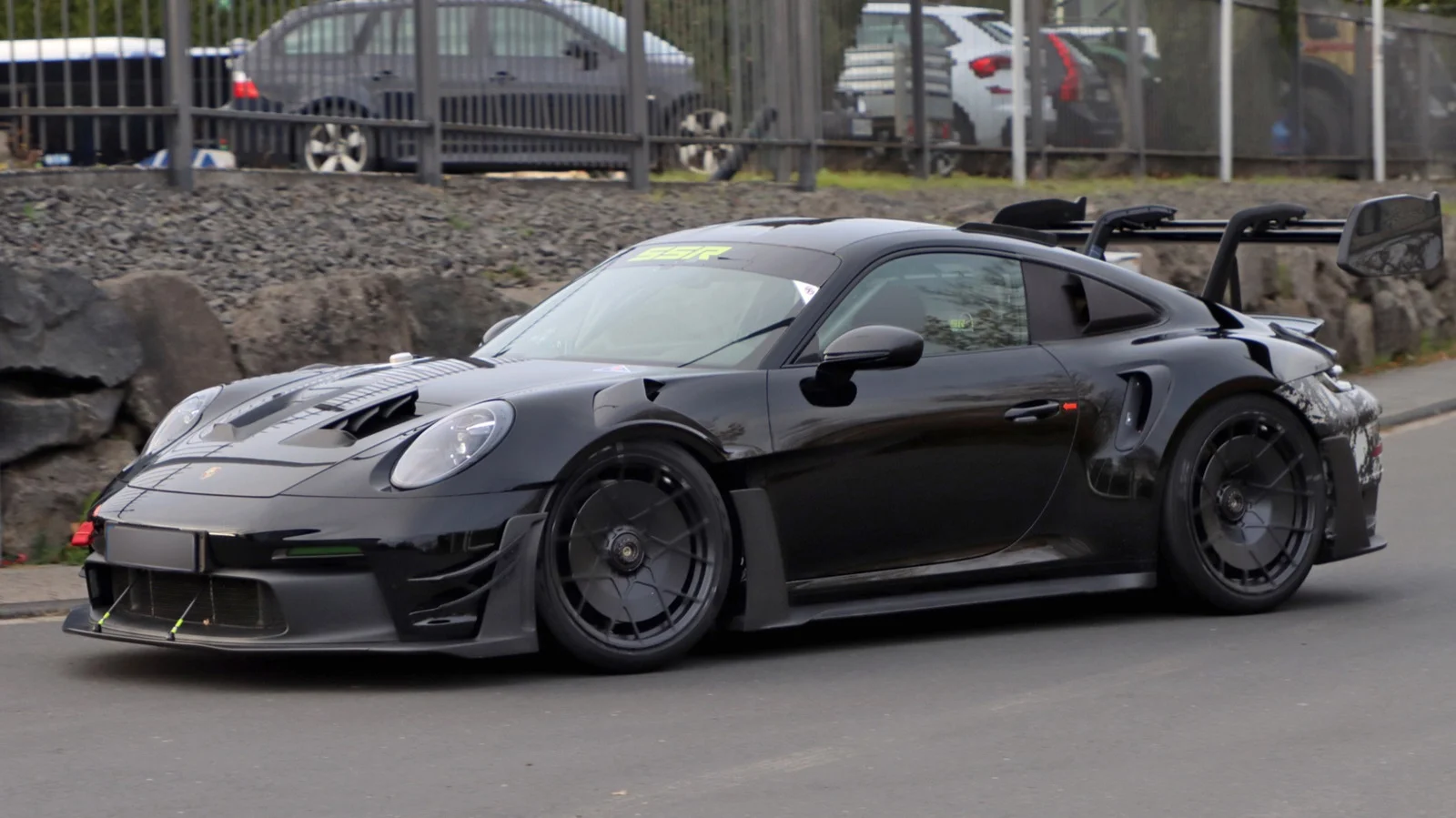
SSR Performance is pushing the Porsche 911 GT3 RS toward GT2 RS territory. Its Project Leo prototype pairs the latest 992.2-generation car with a reported twin-turbo conversion, a move that could lift output from 518 hp to more than 800 hp. That would put the car in a different performance class on paper, though horsepower alone can't establish how it will behave on a circuit. Until SSR releases a specification, the reported figure remains a claim to watch rather than a confirmed measure of the finished car.
The German motorsport and tuning company’s latest prototype has been spotted at the Nürburgring, following earlier sightings in April. SSR hasn’t disclosed the full specification, so the power figure remains unconfirmed. If accurate, it would transform the GT3 RS’s 4.0-liter flat-six and its standard 343 lb-ft of torque. A turbo conversion changes more than peak output: it can reshape how power arrives and what the engine demands from its cooling and supporting systems. The trade-off may be a deeper, more subdued exhaust note, as turbochargers tend to soften the engine’s sound. For a car whose naturally aspirated character is part of its appeal, that’s a meaningful change, not a footnote.
 Baldauf
Airflow is central to the conversion
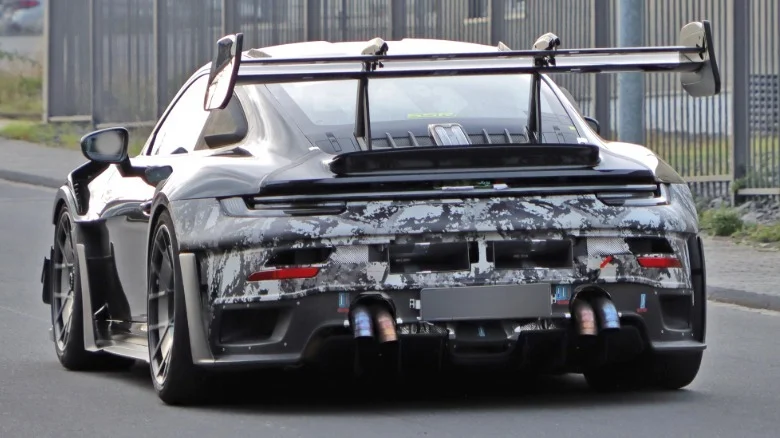
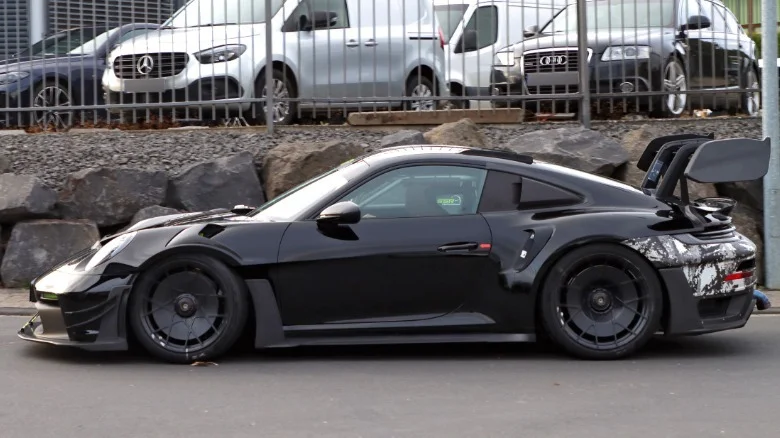
Project Leo’s bodywork points to the demands of cooling and feeding a turbocharged engine. SSR has added vents on the front fenders and a large splitter, while the rear quarter panels wear intake shrouds. What look like rear side windows have become air intakes, echoing a feature of the previous GT2. These details suggest that the conversion reaches well beyond adding turbochargers: air has to be managed around the car, directed to the places that need it, and kept from undermining stability.
The GT3 RS’s central exhaust outlets have given way to two widely spaced pipes, and the rear bumper now has additional cooling slots. SSR has also developed chassis and aerodynamic changes, though the company hasn’t yet detailed how they affect the car’s performance. That missing information matters. Extra power can make a car quicker on a straight, but a lap also depends on how it brakes, turns, puts power down, and holds its pace as components heat up. A more aggressive body can signal intent; it doesn't, by itself, tell us whether the package works.
There’s a practical constraint here, too: every new opening and duct has to serve a purpose without upsetting the balance of the car. The prototype's visible changes offer clues, but they don't reveal the engineering behind them. This is more significant than it looks. If you're working in this space, the interesting question isn't simply how much power SSR can claim, but whether the revised car can use it consistently around a demanding circuit.
The Nürburgring is the measure
SSR said in a spring teaser that it intended to “break many, many records with Leo,” naming the 12.9-mile (20.8-kilometer) Nürburgring Nordschleife as its proving ground. The target depends on which record the company has in mind. A lap-time claim has little meaning without a clear category and a comparable set of conditions, especially at a long circuit where weather and track state can shape the result.
A Manthey-equipped 911 GT2 set a 6:43.300 lap in 2021. The current quickest official Porsche lap at the circuit belongs to a Manthey-modified GT3 RS: Jörg Bergmeister recorded 6:49.328 in June. Project Leo could challenge those times, but the overall production-car benchmark is far quicker: the Mercedes-AMG One posted a 6:29.090 lap in 2024, and no rival has yet matched it. Those times describe different cars and achievements, so they shouldn't be treated as interchangeable targets. The benchmark SSR chooses will define what its record claim actually says.
 Baldauf
Power needs a lap to prove itself
The Nürburgring’s Eifel weather is turning, leaving SSR a narrowing window to attempt a fast lap before the 2026 season ends. That timing makes Project Leo’s next appearance significant: its headline power figure will draw attention, but a verified lap would show what the extensive changes deliver on track. And yet, one lap would still be only one data point. The result would need to be read alongside the stated class, the car’s configuration, and the conditions in which it ran.
That distinction is useful well beyond this project. Tuned performance cars are often introduced through a big output number, because it’s simple to repeat and easy to compare at a glance. Lap times are harder to interpret, but they offer a more direct test of the whole package. A quick, clearly documented run would give Project Leo a stronger case than a power figure alone. A missed target, or no published result, would leave the prototype’s central promise unresolved.
A possible factory rival raises the stakes
Porsche may have its own answer in development. The company is rumored to be preparing a new GT2 RS, reportedly combining GT3 RS aerodynamics with an upgraded version of the 911 Turbo S’s 701-hp, hybrid-assisted 3.6-liter engine. Those details remain unconfirmed, and the comparison with Project Leo is therefore tentative. Still, the prospect points to a familiar tension in high-performance tuning: independent builders can make bold changes quickly, while a factory project may draw on broader development resources and a direct connection to the car’s original engineering.
With Manthey now part of Porsche, the contest for Nürburgring pace could soon include both SSR’s independent project and a factory-backed GT2 RS. That would make the lap-time conversation more interesting, but only if the cars are measured against clearly defined records. For now, SSR has a striking prototype, a reported output above 800 hp, and a stated ambition to set records. The evidence that matters next is what it can do under a timed run. The number is the headline. The lap is the test.

Discussion
Sign in to join the discussion.