Ford's return to the WRC marks an exciting shift, as the automaker aims to infuse rally spirit into its upcoming road cars.
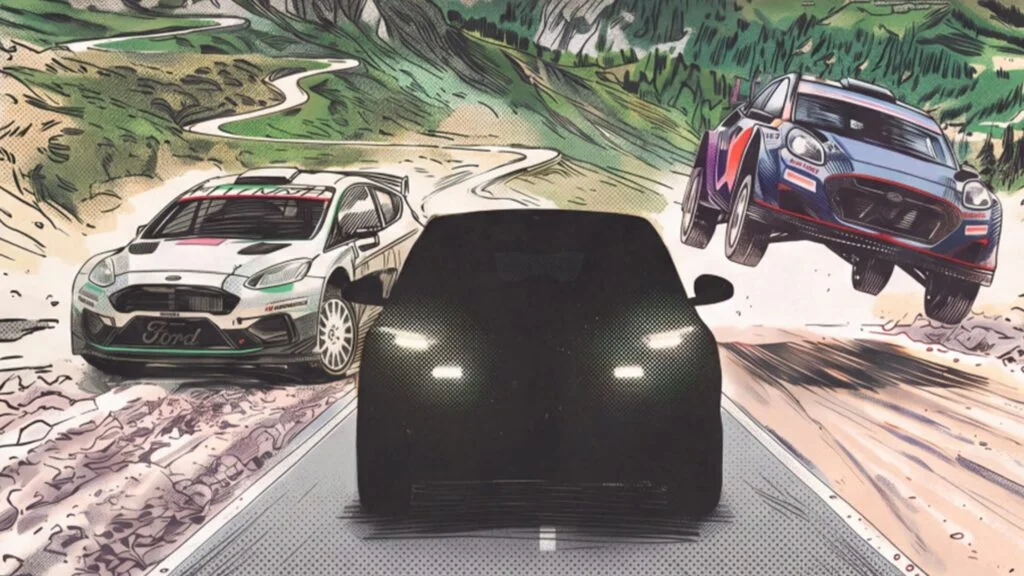
Ford is making a significant return to the World Rally Championship (WRC) after more than a decade, confirming its intention to leverage motorsport as a means to enhance its vehicle lineup. This comeback highlights the automaker's strategy to reignite its passionate fan base while adapting to evolving automotive trends.
- Ford will star in the WRC starting in 2028, utilizing its partnership with M-Sport to reintroduce the Fiesta.
- By 2029, an all-new rally car is set to launch amid ambitious hybrid and electric transitions.
- The newly implemented rules aim to control costs and enhance competition by capping car expenses.
After celebrating 125 years of racing history, Ford is eager to secure more victories. They will kick off their official WRC participation in 2028 by bringing back the Fiesta, alongside M-Sport. This initiative serves as a precursor to the introduction of an entirely new rally machine expected in 2029, designed to showcase cutting-edge engineering.
Ford’s history in the WRC is noteworthy; it was a pivotal player from the championship's inception in 1978 until its withdrawal in 2012. Recent efforts by private teams have kept the Ford spirit alive, but now the factory support is set to make a true comeback, prompting excitement among fans and enthusiasts alike.
The changes in WRC, particularly those slated for 2027, are ambitious. New regulations introduce a €345,000 ($390,000) cost cap aimed at fostering a more diverse set of participants while establishing a standardized tubular space frame safety cell across all teams. Moreover, the race series is evolving to embrace hybrid technology and potentially fully electric vehicles from 2029 onward. This adaptability is expected to broaden the appeal of rally racing.
Jim Baumbick, President of Ford Europe, emphasized the intent behind this strategy in his From The Road blog, stating, “We want you to feel a spark of that rally-stage emotion on your everyday commute.” This approach aims not only to win races but to translate racing experiences into features and dynamics for consumer vehicles, making them more engaging to drive.
Rally Influence on Everyday Vehicles
Ford is positioned to impact the automotive space beyond racing. The automaker is concurrently collaborating with Red Bull Racing in Formula 1, developing a hypercar for the World Endurance Championship, and reformulating its performance lineup across various racing domains, including NASCAR.
Despite this broad engagement in motorsport, there’s no denying that rallying had been a missing facet for years. In 2017, M-Sport’s Fiesta WRC triumphed in both manufacturer and driver accolades, but it was technically M-Sport that represented Ford, indicating the gap Ford is eager to fill.
Looking ahead, the hybrid and electric movements within WRC are set to transform the sport dramatically. The expectation is that these technologies will not only enhance the racing experience but also lead to advancements in consumer car technology. For instance, the capacity to place a variety of body styles—from hatchbacks to crossovers—over a universal safety structure should attract a range of manufacturers and create more excitement in the competition.
A Commitment to Dynamic Driving
Baumbick's commitment to the rally ethos is clear: Ford is discarding the “boring car” mentality and embracing a vision where driving remains an engaging experience. According to him, “We are done building boring cars, and we refuse to build toasters on wheels.” He believes there’s an audience for vehicles designed to inspire a sense of adventure—whether on rugged terrains or smooth highways.
This rally-inspired philosophy is aimed at reshaping perceptions of the Ford brand, not just through the application of technical know-how from WRC to production vehicles, but by fostering a connection to a spirited driving experience. As Baumbick suggests, this "rally-bred" character isn’t merely a marketing tactic; it embodies a fundamental shift toward dynamic design and performance.
With these strategies in place, Ford appears poised to reclaim its position as a prominent force in the WRC and the broader automotive market, ensuring that the exhilaration of rally racing can resonate with everyday drivers.
Discussion
Sign in to join the discussion.