The Hyundai Staria Electric has debuted in Europe, offering spaciousness and competitive pricing, aiming to compete directly with the VW ID. Buzz.
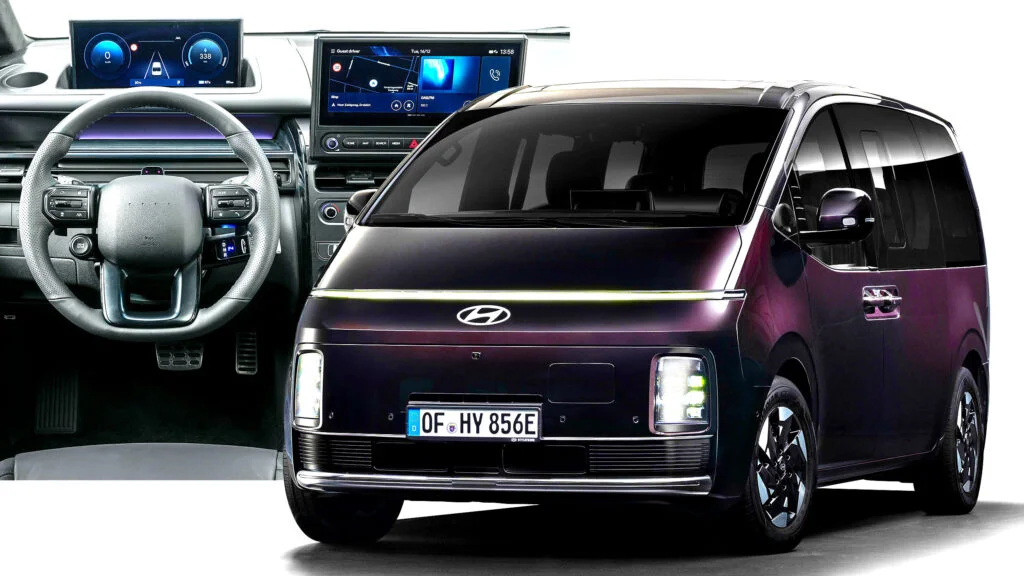
The Hyundai Staria Electric is now available for European orders, marking a significant expansion for the brand's electric vehicle lineup. With an 84 kWh battery, it boasts a range of up to 430 km (267 miles) per charge, positioning it as a strong contender against rivals like the VW ID. Buzz. Hyundai's push into the electric segment is in line with industry trends, as many automakers are accelerating their electric vehicle offerings amidst growing consumer demand and tightening emissions regulations.
Dimensions and Capacity
Measuring at 5,253 mm (206.8 inches) in length, the Staria Electric surpasses the ID. Buzz in size and passenger capacity, effectively catering to those needing ample space for travelers and luggage. It can comfortably accommodate up to nine passengers across three rows. This model presents itself as the ideal choice for families or groups looking for spacious electric transport. You might be surprised, but the dimensions really do matter for potential buyers prioritizing comfort and practicality in their transport choice. The larger size allows for a more considerable interior space, which is crucial for anyone who frequently travels with large items or multiple passengers.
Design Elements
Distinguishing itself from gas and hybrid variants, the Staria Electric features a sleek redesigned front façade. The new bumper design effectively conceals the grille behind a smooth panel, which is accompanied by a charging port and active shutters to optimize aerodynamics. Hyundai's design strategy focuses on not just aesthetics; it’s also functional. The incremental improvements in aerodynamics can lead to better overall efficiency, which is an essential aspect of electric vehicles. Additional identifying features include aerodynamically designed wheels and a distinctive badge on the vehicle’s large tailgate. These elements can give it a more modern appearance, which may appeal to environmentally conscious consumers who still want to make a visual statement.
Trim Options and Features
In Europe, the Staria Electric is offered in three trims: Trend, Prime, and Calligraphy. Even the base Trend trim comes equipped with full-LED headlights, dual 12.3-inch infotainment displays, heated front seats, parking sensors, a reversing camera, and a layout accommodating nine passengers across three rows. Standardization of such advanced features reflects a growing expectation among consumers that technology shouldn't just be a luxury—it's becoming a norm. The optional assistance package includes features such as navigation and highway assist, while a premium offering adds conveniences like electric sliding doors and a wireless charging pad. The Prime trim enhances luxury with leather upholstery and ventilated front seats, with options for a sliding first-row roof and a fixed panoramic roof for the second-row seating.
The Calligraphy variant stands out with its seven-seat configuration, focusing on luxury with two comfort seats that provide heating, ventilation, and relaxation capabilities. Exclusive features for this trim include ambient lighting, a premium Bose sound system, and a sophisticated 360-degree camera. This is more significant than it looks; manufacturers are increasingly recognizing that consumers want a blend of practicality and luxury in their electric vehicles.
Spaciousness and Cargo Capacity
The Staria Electric excels in carrying capacity, with an impressive cargo space of 1,303 liters (46.0 cubic feet) available behind the third row, and an additional frunk (front trunk) space of 24 liters (0.85 cubic feet). It can tow up to 2,000 kg (4,409 lbs) and has a maximum payload capacity of 750 kg (1,653 lbs), providing versatility for various needs. This is advantageous for families or businesses that rely on electric vehicles for transport and logistics, ensuring they won't have to compromise on storage space. Several competitors fall short in this department, so Hyundai’s conscious effort to provide practical utility could set it apart in a crowded market.
Performance Specs
Under the hood, the Staria Electric is powered by a front-mounted electric motor that delivers 215 hp (160 kW / 218 PS). With its 84 kWh battery, it supports fast charging capabilities through an 800-volt architecture, reaching from 10% to 80% in roughly 20 minutes when connected to a DC charger. This efficiency in charging can be a decisive factor for busy families and business users who may not have extensive time to wait on long trips. Moreover, it includes a standard heat pump and battery heating system to enhance efficiency and performance. Such specifications underline Hyundai's strategic approach to maximize the functionality of their electric vehicles without veering too far from traditional performance expectations.
Pricing and Market Position
In Germany, pricing for the Staria Electric starts at €57,450 ($66,800) for the base Trend trim and progresses to €66,950 ($77,800) for the top-tier Calligraphy. Several optional packages, including the assistance and premium packages, add an additional cost of €2,100 ($2,400) each, while the panorama package costs €1,300 ($1,500). These figures are competitive, but they also raise a question about value—especially compared to similarly sized electric vehicles.
For a comparative glance, the VW ID. Buzz Pro starts at €57,887 ($67,300) in the same market, featuring a long wheelbase and an 86 kWh battery. In contrast, the VW e-Caravelle has a starting price of €66,080 ($76,800) with a short wheelbase and a smaller 70.9 kWh battery. What this means for you if you're considering an electric vehicle is that you have options. The Staria Electric not only aims to attract customers through its features and price point but also stands as a testament to Hyundai's commitment to expanding its electric vehicle offerings in a rapidly evolving market.
Future Outlook and Implications
The Hyundai Staria Electric's entry into the European market represents more than just another electric vehicle; it signifies a critical moment for Hyundai as they continue to assert themselves amidst established competitors. With growing environmental concerns and shifting consumer preferences, electric vehicles are more than a trend; they're becoming staples for families and businesses alike.
As manufacturers like Hyundai expand their offerings, the competitive landscape will only sharpen. If you're working in this space, staying informed on these developments is essential. The features, design elements, and pricing of the Staria Electric will likely challenge competitors to enhance their own offerings. And yet, the flexibility and features of this vehicle could potentially reshape family transportation. In a market craving practicality, Hyundai seems ready to make a lasting impact.
Discussion
Sign in to join the discussion.