The Japan-only Corvette V8 Tourer pairs a 495-hp Stingray convertible with exclusive trim and a 15-car production run.

The Corvette V8 Tourer makes scarcity its main distinction. Chevrolet is building just 15 examples for Japan, giving this Stingray-based special edition a tighter production cap than the far more powerful ZR1X. It starts at ¥21,500,000, about $135,600 at current exchange rates—roughly ¥1,900,000 ($12,000) above a standard Stingray. That price premium buys a defined appearance and a place in a very small production run; the figures alone don’t suggest a major mechanical step beyond the Stingray.
The limited run also highlights how Chevrolet tailors the C8 for right-hand-drive markets. The V8 Tourer uses the convertible body and the naturally aspirated 6.2-liter LT2 V8, which produces 495 horsepower and 470 lb-ft of torque. North American Stingrays now get a 6.7-liter LS6 rated at 535 hp and 520 lb-ft, so the Japanese edition trades some output for a distinctive specification and rarity. The comparison makes the Tourer’s purpose clearer: it isn’t positioned as the newest or strongest version, but as a Japan-specific package built around familiar hardware.
Scarcity is the headline
Fifteen cars is a small allocation for a model with broad name recognition, and that limit does much of the work in defining the V8 Tourer. Exclusivity can matter to buyers who want a car that’s visibly different from a regular Stingray, especially when the edition has a coherent specification rather than a badge added to an otherwise unchanged order. But low production alone doesn’t tell us how much demand there’ll be, or whether the premium will feel justified to an individual buyer.
The price gap is specific: about ¥1,900,000 above a standard Stingray. In practical terms, buyers are paying for the special trim and the limited allocation alongside the car itself. This is more significant than it looks for a market-specific model: the edition gives Chevrolet Japan a way to make the C8 feel locally distinctive without changing its basic character.
A single exterior and cabin specification
Chevrolet offers the V8 Tourer only in Red Mist Metallic, with full-length silver racing stripes, silver twin five-spoke wheels and chrome exterior badges. The side air-vent vanes match the body color, while black brake calipers complete the package. The result is a carefully defined appearance rather than a wide-ranging set of customization choices. That has a trade-off: buyers who like the design get a unified factory look, while those who want to choose their own colors or trim have little room to shape the car.
The cabin follows the same one-spec approach. Tan leather covers the seats, door panels, dashboard and even the floor mats. A black leather steering wheel, small black sections around the screens, and metal speaker grilles and switch panels provide contrast. The interior treatment carries the edition’s identity beyond the exterior, though a fixed color scheme is inherently personal; tan leather may be the point for one buyer and a reason to pass for another.
There’s no menu of configurations to sort through. That simplicity makes the Tourer easy to understand as a special edition, but it also means the buyer is accepting Chevrolet’s complete visual recipe.
Powertrain context and market position
The LT2’s naturally aspirated V8 gives the Tourer a direct connection to the Stingray’s established formula: a large-displacement engine without the added complexity of forced induction. Its 495 hp and 470 lb-ft remain substantial figures, yet the newer North American Stingray’s stated output is higher. That difference puts the Tourer in an unusual position: it’s rare by production count, but its engine specification isn’t the latest Stingray setup described here.
That distinction matters because rarity and performance answer different questions. If you're working in this space, the useful comparison is not just which car has the bigger output figure, but what each edition is meant to offer. The V8 Tourer’s case rests on its Japanese availability, convertible body and tightly controlled styling. The engine remains central to the Corvette identity, but it isn’t the edition’s main selling point.
What the limited run signals
Chevrolet’s Japan site presents the V8 Tourer as a particularly scarce C8, while limited-run Corvettes have appeared less often in the United States. One recent U.S. example was the 2026 Stars & Steel Collection, a 250-car edition marking America’s 250th anniversary. The two editions show different ways a manufacturer can give an established sports car a special-edition identity: one through a very small allocation and a fixed color treatment, the other through a larger commemorative run.
And yet, a production cap isn’t the same thing as a broader change in the Corvette lineup. The available details point to a focused Japan-market offering, not a new performance tier. For buyers, the appeal will depend on whether the specific combination of scarcity, convertible body and tan-and-red styling matters more than having the latest engine specification.
The Tourer is a narrow proposition by design. Its scarcity is real, its styling is unusually prescriptive, and its output sits below the latest North American Stingray figures. For a buyer who wants a Japanese-market C8 with a ready-made identity, that may be enough. For everyone else, the standard model’s flexibility may matter more.
Images

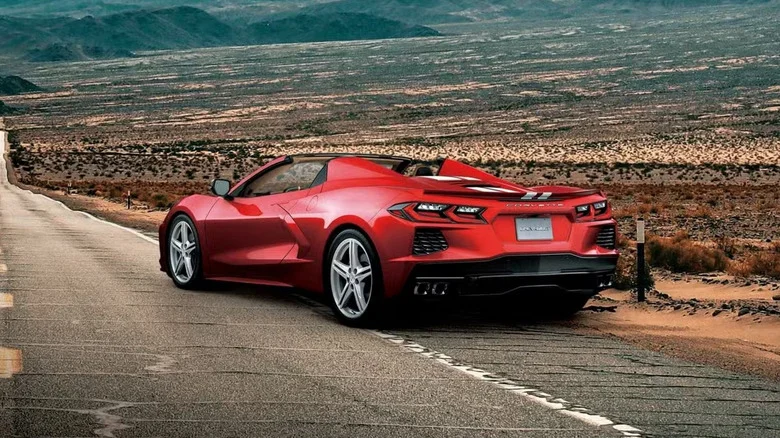
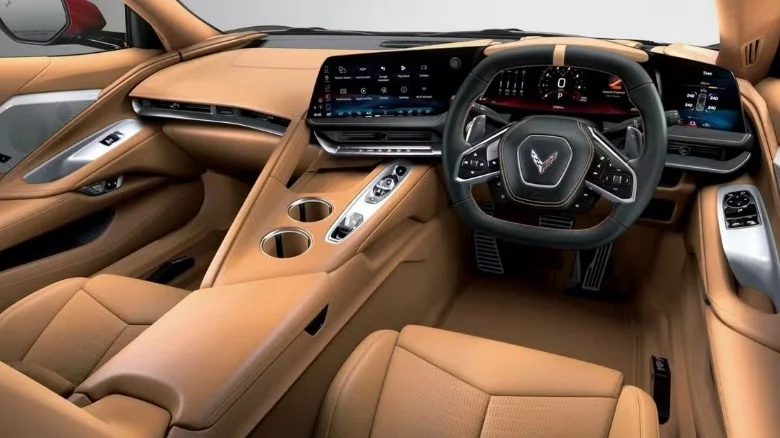
For buyers in Japan, the Tourer’s appeal is clear: a familiar Stingray drivetrain wrapped in a fixed, tan-and-red specification, with only 15 cars available. Its limited run is the defining feature; the power figures place it below the latest North American Stingray. The question is whether that exact combination feels worth the premium to a buyer who could choose a standard Stingray instead.


Discussion
Sign in to join the discussion.