Honda will unveil the 0 Alpha electric SUV on December 2, with India as its main market and Japan among its planned destinations.
A regional electric bet
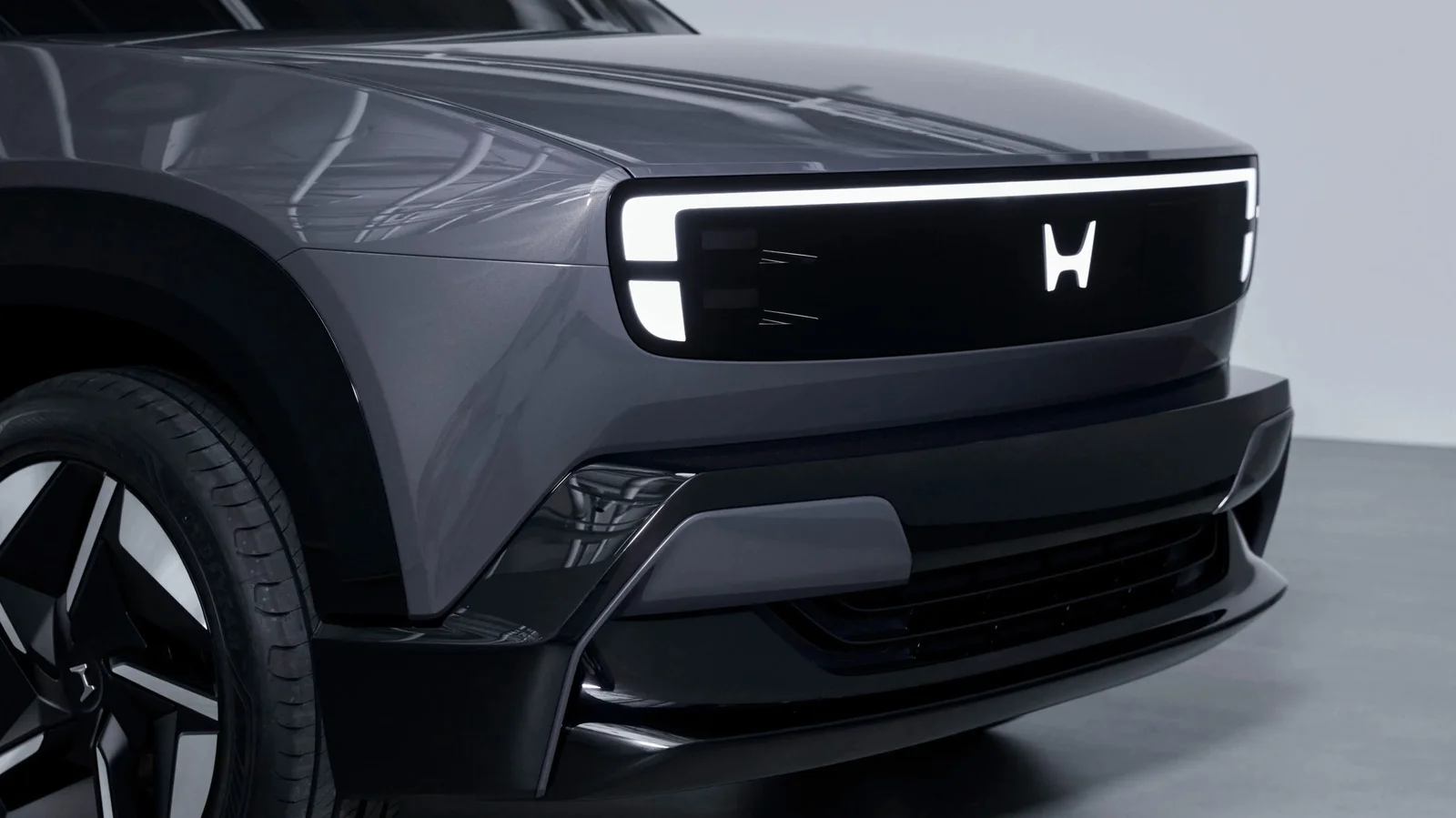
Honda’s 0 Alpha is the remaining electric SUV from its 0 Series plans, but the company’s ambitions for it are selective. The production model is due to debut on December 2, with India as its main target market and Japan expected to follow. It won’t be sold in the United States, where Honda has cancelled the 0 Series sedan and SUV, along with the Acura RSX.
That decision gives the 0 Alpha a role beyond a single new model: it now carries much of Honda’s near term EV ambition. The contrast is striking. Honda is advancing an electric SUV for markets it has identified as priorities while stepping back from a planned US lineup. That doesn’t tell us how the vehicle will sell, but it does make the 0 Alpha a useful measure of where the company is prepared to put its product effort.
First shown as a concept at the Japan Mobility Show in October 2025, the SUV entered public road testing in India in March 2026. Camouflaged prototypes have since appeared on roads in India and Japan. The testing suggests Honda is moving beyond a show stand proposal, though sightings alone can’t establish how close the vehicle is to production or what its final specifications will be.
A compact SUV shaped for Indian roads
The disguise still hides much of the production design, but the overall profile appears close to the concept. Visible details include lighting set into a covered grille, prominent bumpers, wheel arch cladding, broad rear fenders and an upright tail with vertical or U shaped lights. Those elements give the prototype a distinctive outline, but camouflage makes it hard to judge how much of the concept’s visual drama will reach showrooms.
Its proportions suggest a smaller relative of Honda’s cancelled 0 SUV. The prototype’s squared off rear also sets it apart from a more rounded crossover shape. Honda says the vehicle was developed with Indian road and weather conditions in mind. That claim matters because an EV designed for local use has to account for more than styling: suspension, ground clearance, cabin comfort and thermal management can all affect the experience. The company hasn’t yet explained how those priorities shaped the production vehicle.
謎のテストカーを発見!
車体全体がカモフラージュされていて、サイズはRAV4くらい。
これってどこのメーカーの何という車種なんだろう?🤔
車に詳しい方、分かりますか?#テストカー #開発車両 #スクープ pic.twitter.com/uBWVlsIbJe
— MattSUN(マットサン)@スクナファミリー (@MattSUN_mAATsun) October 10, 2026
Kirain Honda beneran mundur dari dunia EV
Ternyata SUV Listrik Pertama Honda Terlihat Sedang Diuji di sebuah Dataran Tinggi di India.
Mobil yang tertangkap kamera, mirip seperti konsep futuristik Honda 0 Alpha yang dipamerkan di Japan Mobility Show 2025.
Mobil listrik Honda... pic.twitter.com/vbhAaJ6Ck3
— SmwGwOto (@SmwGwOto) June 28, 2026
Spy photos of the cabin point to a restrained layout: a large infotainment screen, digital instrument display, flat bottom steering wheel and a separate climate control area on the center console. That arrangement suggests Honda is keeping familiar physical controls for at least some functions, rather than putting every adjustment into a touchscreen. A photograph can show the broad layout, though it can’t tell us whether the controls are intuitive or how well the screen works in daily use.
The cabin will be judged on practical details as much as its displays. In a compact SUV, usable space, visibility and the ease of adjusting climate settings can shape the ownership experience. Honda says the interior will be roomy, but dimensions and production specifications haven’t been released. For now, the cabin images offer clues, not a full picture.
Local production, export potential
Honda says the SUV will follow its “Thin, Light, and Wise” approach, pairing a refined exterior with a roomy cabin. It uses a platform built specifically for electric vehicles. That gives Honda room to design around an electric powertrain from the outset, but the phrase alone doesn’t explain how the company has balanced cabin space, vehicle weight, cost and range. Those tradeoffs will become clearer when Honda publishes technical details.
A front wheel drive setup with one motor and two LFP battery choices is expected, though Honda hasn’t confirmed those specifications. Indian media reports suggest the larger battery could deliver up to 500 km (311 miles) per charge. That figure remains unconfirmed, and a claimed range by itself says little about how a vehicle will perform in varied driving conditions. The battery options could give buyers a choice between cost and distance, but pricing and usable range will determine whether that distinction matters in practice.
Honda will build the vehicle at its Tapukara plant in Rajasthan, then may export it to markets including Japan, following the path of the India built Elevate. Local production gives the company a base for serving its main target market and could support exports if Honda chooses to pursue them. The distinction is important: Japan is expected to follow India, but the broader export plan remains a possibility rather than a confirmed commitment.
The 0 Alpha will enter a busy Indian electric SUV segment, alongside the Tata Sierra EV, Suzuki e Vitara, Toyota Ebella, Mahindra BE 6, MG ZS EV and an electric Hyundai Creta. Honda has yet to disclose pricing; Autocar India estimates a range of ₹16 lakh ($16,900) to ₹25 lakh ($26,400). That’s a wide enough span that the final price and equipment could place the 0 Alpha against different rivals. The numbers here are still estimates, so they don’t yet show where Honda intends to compete.
昨日西尾で見たテストカーどこのなんだろ
ホンダのゼロアルファなのかな?
#ホンダ #テストカー pic.twitter.com/7s9GUYFlHi— おれんじ- (@XC_Dream) October 14, 2026
Upcoming Honda Electric SUV for India 🇮🇳
Spied testing on bad roads ahead of launch
📸 hero_samar pic.twitter.com/uiLgjq0hcy
— RushLane (@rushlane) October 3, 2026
What the launch will clarify
This is more significant than it looks: the 0 Alpha is a test of whether Honda can turn a regional EV plan into a credible product, even as its broader 0 Series plans shrink. If you're working in this space, the key signals will be the confirmed battery choices, the production design, the price and whether Japan becomes a real export destination. The December 2 reveal should answer some of those questions, though it won’t by itself prove how the SUV performs with customers.
Here’s the thing: Honda’s stated focus on India gives the 0 Alpha a clear starting point, but the company still has to make the case in a crowded segment. (And this is the part most people overlook.) A concept that draws attention is only the first step; buyers will weigh practical range, cabin usability and value against available alternatives. The evidence so far is promising in outline, but incomplete on the details that decide a purchase.
Until Honda fills in those gaps, the SUV’s prospects remain hard to judge. The December 2 debut should clarify how much of the concept survives in production and whether the 0 Alpha can become a credible contender in its priority markets. The real test comes after the reveal.
Discussion
Sign in to join the discussion.