Brazil’s 2027 Compass gains a mild hybrid option and small trim updates, while a larger South American overhaul is reportedly planned around 2028.
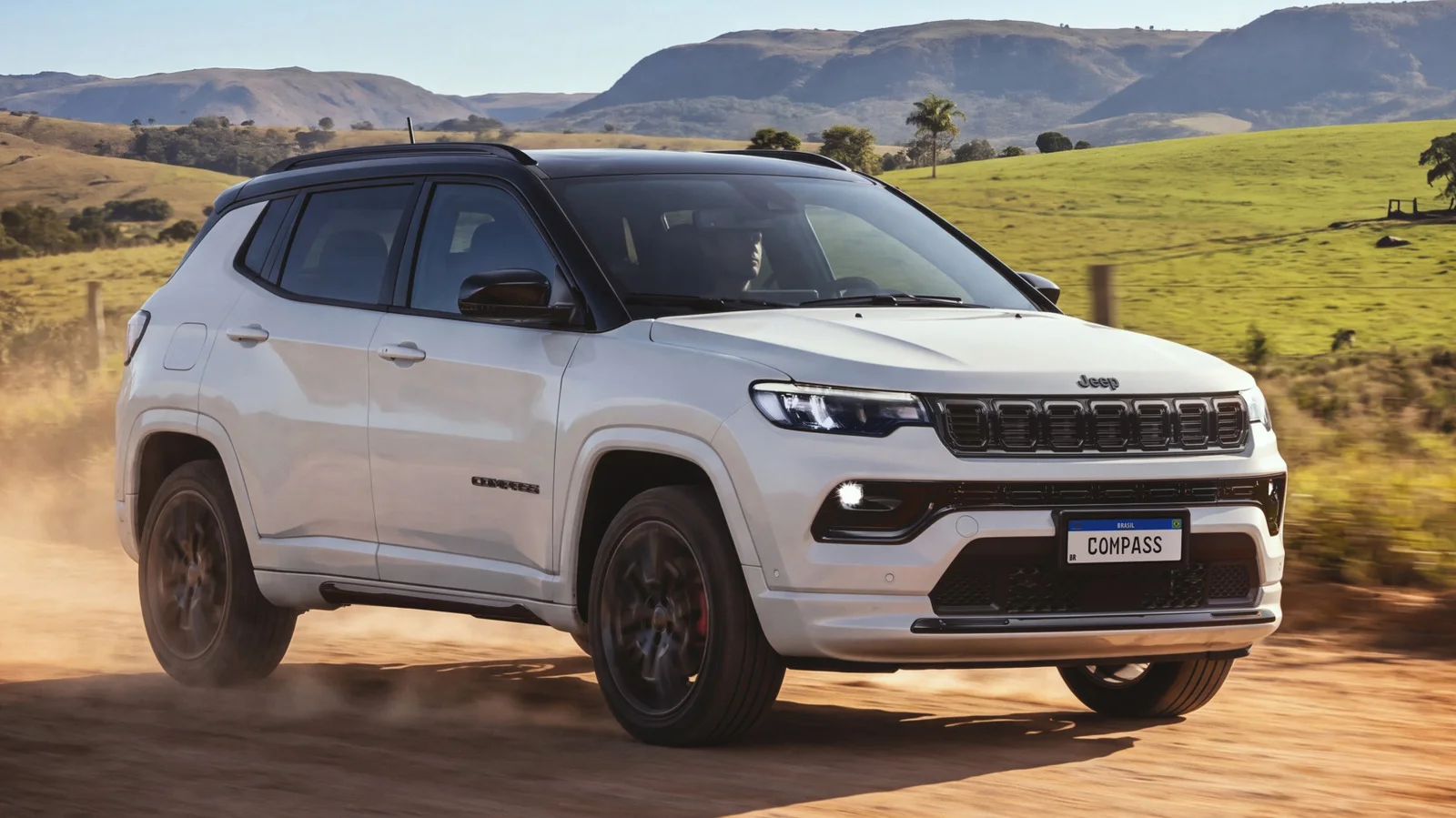
The 2027 Jeep Compass gets another year in Brazil with its biggest change under the hood: a mild hybrid system for selected trims. The update adds efficiency technology to a design that dates to 2016, while Jeep’s longer-term plans point to a more substantial South American refresh around 2028. That makes this a year of measured adjustments rather than a new-generation reset. The distinction matters: buyers get a new powertrain option, but the Compass’s basic shape and cabin remain familiar.
Brazil is among the markets still using the second-generation Compass, which received its latest major facelift in 2021. The 2027 model keeps that exterior largely intact, so the changes are easier to spot in a trim sheet than from a distance. New 18- and 19-inch wheel designs and a Slash Gold paint option provide the visible updates; the new Longitude Night Eagle trim adds darkened badges. These touches refresh the presentation, though they don’t alter the model’s underlying design.
The cabin also carries over the facelift-era layout, with a 10.25-inch digital instrument panel and an 8.4-inch infotainment screen. Higher trims add synthetic suede to the dashboard and door panels, giving the upper versions a different finish without changing the cabin’s basic architecture. Jeep’s announcement described the lineup’s equipment but didn’t include interior photos, leaving the materials and their execution difficult to assess from the announcement alone. For shoppers, the practical question is whether the trim changes add enough distinction to justify choosing a higher version.
A mild hybrid joins Brazil’s TurboFlex lineup
The Longitude Night Eagle and Series S can now be ordered with a mild hybrid version of the 1.3-liter TurboFlex four-cylinder. Output remains 176 hp (131 kW / 178 PS), while Jeep says the belt-driven starter-generator can cut fuel consumption by as much as 11%. That’s the headline claim, but it’s a maximum figure rather than a promise that every driver will see the same reduction. The announcement gives buyers a target to consider, not a real-world result across different routes, driving styles, or fuel choices.
A belt-driven starter-generator supports the engine rather than replacing it with a full electric drive system. In this kind of arrangement, the electric component can assist the combustion engine and recover energy during deceleration, while the vehicle still depends on its engine for propulsion. That makes mild hybridization a relatively contained way to add electrification to an existing powertrain. It also means buyers shouldn’t read “hybrid” as a claim that the Compass can drive like a plug-in hybrid or an electric vehicle.
That system differs from the mild hybrid Jeep previously sold with the older Compass in Europe, which paired its technology with a turbocharged 1.5-liter engine. The current European Compass uses a different setup: a turbocharged 1.2-liter three-cylinder with mild hybrid assistance as standard. The regional versions therefore share a broad label but not the same engine or configuration. Here’s the thing: “Compass” describes a global model family, but the hardware reflects local product choices and production plans.
Sport and Longitude versions in Brazil retain the non-hybrid 1.3-liter engine, driving the front wheels through a six-speed torque-converter automatic. TurboFlex means the engine can run on either gasoline or ethanol, a feature suited to Brazil’s fuel market. Keeping that option in the range gives buyers a choice between the established engine setup and the new mild hybrid versions, rather than forcing the electrified system across the lineup. The trade-off is straightforward: the efficiency claim applies to selected trims, while other versions keep the existing configuration.
At the top of the range, the Blackhawk keeps its 2.0-liter Hurricane TurboFlex four-cylinder, rated at 272 hp (203 kW / 276 PS) and paired with a nine-speed automatic. It remains the only Brazilian Compass offered with all-wheel drive. That places the Blackhawk in a different role from the mild hybrid versions: it’s the high-output choice, while the new system targets fuel consumption in selected trims. A broader lineup can serve different priorities, but it also makes the trim and powertrain details central to comparing versions.
A bigger change may be on the way
The current model’s 2027 update looks like a holding move ahead of a reported South American redesign around 2028. Stellantis may retain and upgrade the Compass’s FCA Small Wide platform instead of adapting the newer European model, which uses the STLA Medium architecture and would require changes at the Goiana plant. That reported choice points to the practical constraints behind regional model planning: a vehicle’s architecture has to fit the manufacturing setup as well as the product brief. The available information doesn’t establish which route Stellantis will take.
Reports also point to a broad exterior and interior redesign, mechanical updates, and the possible addition of a range-extender powertrain using technology from Chinese partner Leapmotor. Those plans haven’t been confirmed. A range extender would mark a bigger change in the Compass’s powertrain story than the mild hybrid system, but the report alone doesn’t establish what configuration might reach production or when. For now, it’s a possibility attached to a future redesign, not a specification buyers can plan around.
This is more significant than it looks: the mild hybrid gives Jeep a way to update the current Compass while its next South American product direction remains unsettled. If you’re working in this space, the key signal is the split between a familiar vehicle getting incremental changes and reports of a deeper regional rework. And this is the part most people overlook: a platform decision can shape which powertrains and design changes are practical at a local plant. The 2027 model is therefore both a product update and a bridge to a decision that hasn’t been publicly settled.
Regional plans remain unsettled
North America’s path remains unsettled, too. Stellantis dropped plans to build the third-generation Compass at its Brampton plant in Ontario, while importing the Italian-built European version is constrained by tariffs. The company is considering an SUV based on STLA One for production at Belvidere, Illinois, alongside the next Cherokee. Those details describe a separate regional problem, and they don’t settle what the company will do in South America. The plans show how a shared nameplate can face different manufacturing and product choices in each market.
For Brazilian buyers, the immediate decision is more concrete: whether the selected mild hybrid trims offer an appealing balance of equipment and claimed efficiency compared with the non-hybrid versions. Jeep hasn’t supplied enough detail here to judge how the system performs across everyday driving, so the stated reduction should be treated as a claim to verify against later information. That said, the 2027 Compass does give the outgoing model a new option while retaining its existing engines and core design. A measured update. The larger story will depend on whether the reported redesign and powertrain plans become confirmed products.

Discussion
Sign in to join the discussion.